
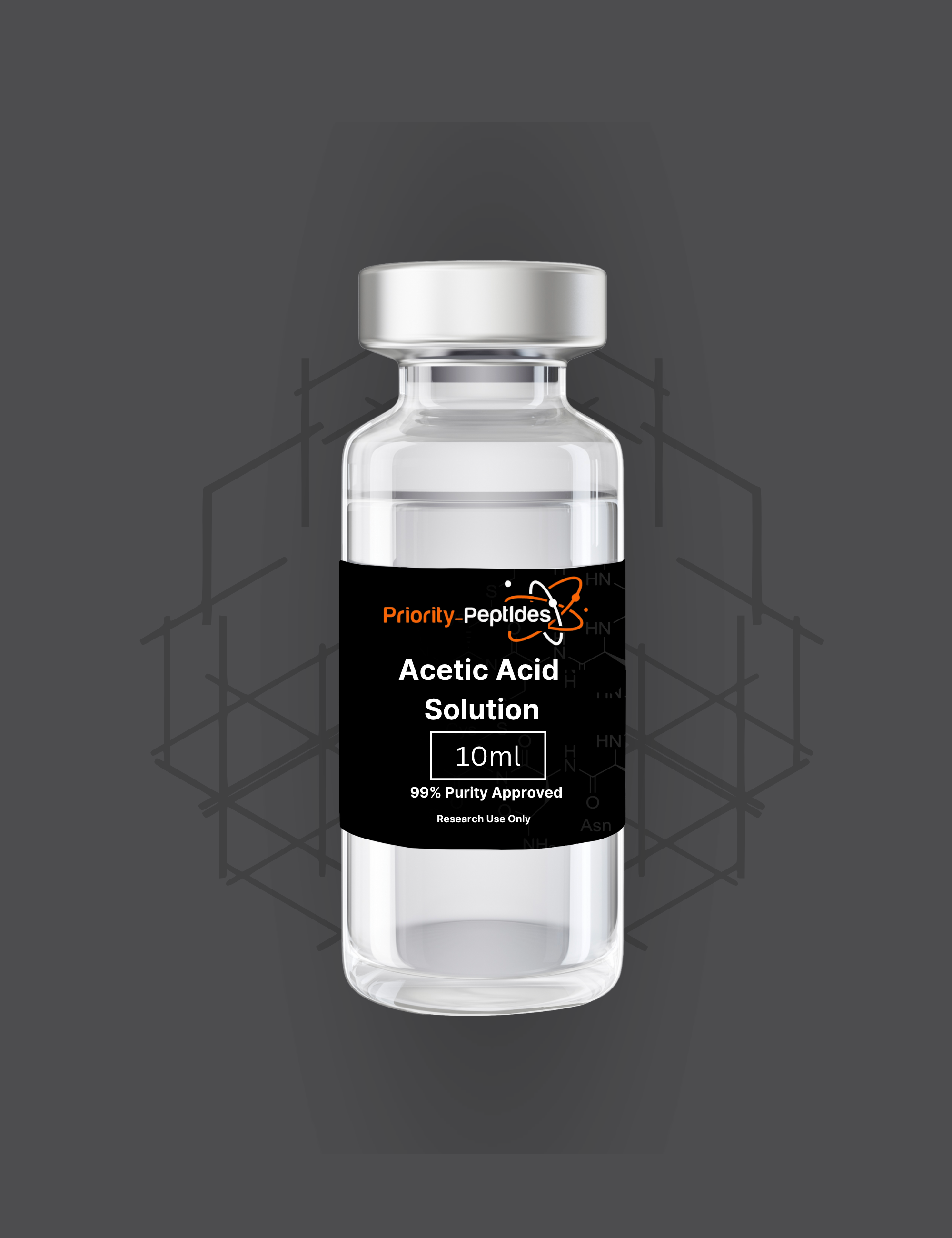
Acetic Acid Solution
$4.99
Out of stock
Acetic Acid Solution is a dilute aqueous preparation of glacial acetic acid (CH₃COOH), commonly provided at a concentration of 0.1%–1.0% (v/v) in molecular biology–grade water. It is widely used in peptide research as a solvent and stabilizing agent for acid-sensitive or poorly soluble peptides, particularly those containing basic residues or prone to aggregation.
What is Acetic Acid Solution?
Acetic Acid Solution is a dilute aqueous preparation of glacial acetic acid (CH₃COOH), commonly provided at a concentration of 0.1%–1.0% (v/v) in molecular biology–grade water. It is widely used in peptide research as a solvent and stabilizing agent for acid-sensitive or poorly soluble peptides, particularly those containing basic residues or prone to aggregation.
Chemical Identity
- Chemical Name: Acetic Acid
- Molecular Formula: C₂H₄O₂
- Molecular Weight: 60.05 g/mol
- CAS Number: 64-19-7
- pKa: 4.76 (at 25 °C)
- Typical Research Concentration: 0.1% to 1.0% (v/v) aqueous solution
Benefits in Peptide Reconstitution
- Enhanced Solubility: Acidic environment promotes protonation of basic amino acids (e.g., arginine, lysine), increasing solubility of peptides that are hydrophobic or aggregation-prone.
- Stabilization of Peptide Integrity: Low pH reduces the risk of oxidation and hydrolytic degradation in sensitive sequences.
- Consistent and Reproducible Dissolution: Provides a simple, chemically defined solvent system that minimizes variability in peptide assays.
- Compatible with Most In Vitro Systems: Properly diluted acetic acid (typically ≤1%) has negligible cytotoxic effects in short-term assays and is compatible with many cell types and enzyme reactions.
Use in In Vitro Research
Acetic Acid Solution is commonly used for:
- Initial peptide reconstitution before dilution into assay buffers or culture media.
- Maintaining peptide solubility in high-concentration stock solutions stored at −20 °C.
- Preparing working solutions for hormone analogs, bioregulators, growth factors, and antimicrobial peptides.
- Enzyme assay preparation, where specific pH conditions are required to maintain activity and solubility.
Preparation and Handling Guidelines
- Use molecular biology–grade water or sterile distilled water to prepare a 0.1–1.0% solution.
- Adjust pH, if necessary, to match assay requirements (typically ~4–5 for acidic peptides).
- Store in clean, acid-resistant containers (e.g., borosilicate glass or HDPE).
- Avoid repeated freeze-thaw cycles of peptide-acetic acid solutions to preserve peptide stability.
Specifications
| Feature | Detail |
| Product Name | Acetic Acid Solution (for Peptide Reconstitution) |
| Concentration | Typically 0.1% – 1.0% v/v in water |
| Solvent | Molecular-grade or sterile distilled water |
| pH Range | ~2.4 (1%) to ~4.0 (0.1%) |
| Purity | ≥99.7% (acetic acid starting material, analytical grade) |
| Sterility | Non-sterile (can be sterile-filtered if required) |
| Storage | Room temperature; refrigerate for long-term use |
| Packaging | Amber HDPE bottles; airtight seal |
Future Research Applications
- High-throughput screening platforms requiring peptide consistency.
- Peptide mapping or mass spectrometry sample preparation.
- Controlled peptide stability studies involving acid-dependent cleavage or degradation pathways.
- Bioassay formulations where precise pH conditions are critical for activity and cell uptake.
Disclaimer
This product is intended for research purposes only. It is not approved for human or veterinary use, nor is it intended for clinical, diagnostic, or therapeutic applications. All research must comply with applicable local laws and institutional guidelines. Misuse of this compound for human consumption is strictly prohibited.