
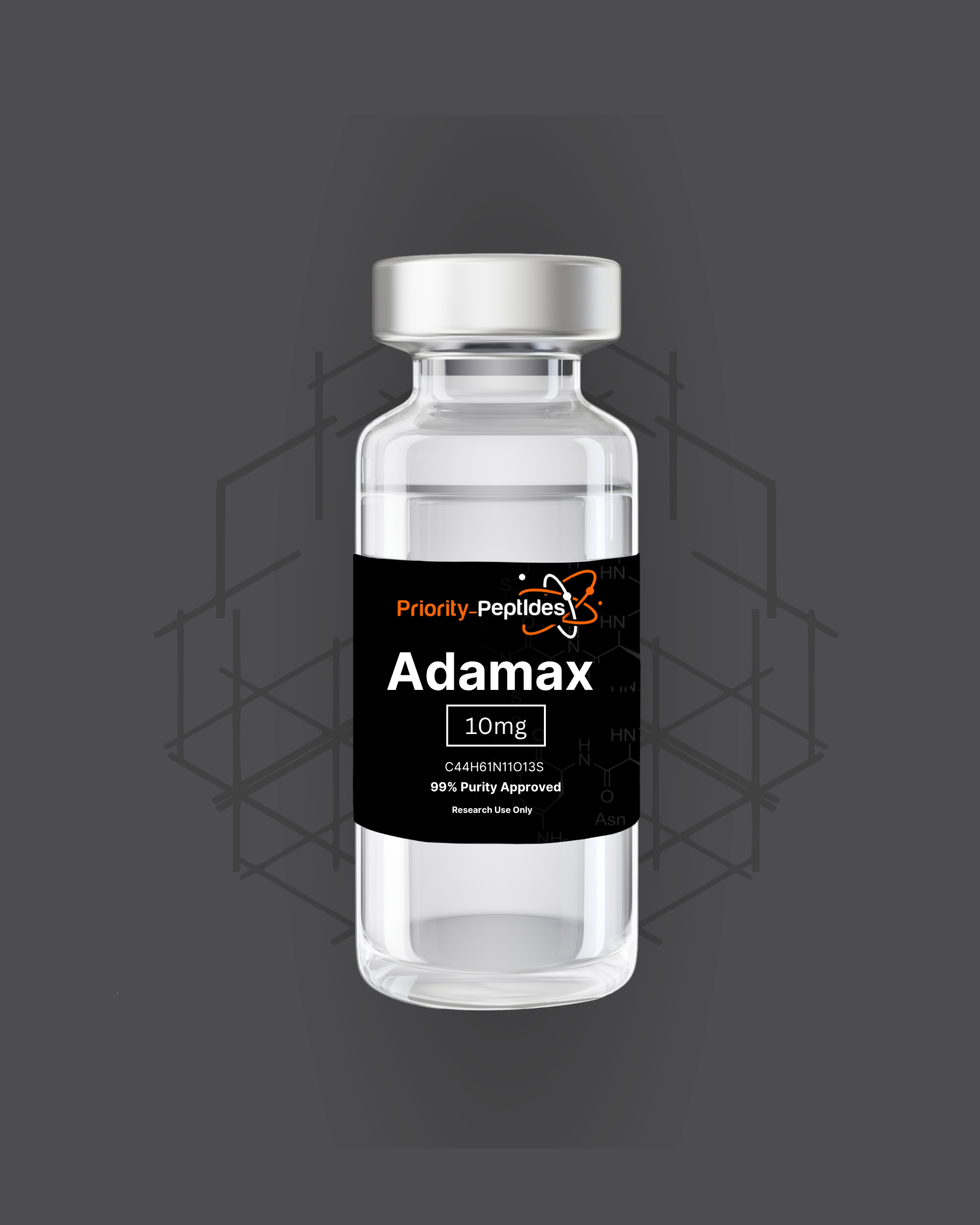
Adamax 10mg
$64.99
Availability: 24 in stock
ADAMAX is an advanced and potent nootropic peptide, considered to be an improved derivative of SEMAX, a neuropeptide originally developed by the Institute of Molecular Genetics of the Russian Academy of Sciences. ADAMAX differs from Semax by a key structural modification—N-terminal acetylation and the addition of the adamantyl group at the C-terminus, which significantly enhances its potency and stability. ADAMAX is designed to improve cognitive functions, neuroprotection, and support neurogenesis, making it a promising peptide for neuroscience research.
Introducing ADAMAX: A Comprehensive Overview for Researchers
What is ADAMAX?
ADAMAX is an advanced and potent nootropic peptide, considered to be an improved derivative of SEMAX, a neuropeptide originally developed by the Institute of Molecular Genetics of the Russian Academy of Sciences. ADAMAX differs from Semax by a key structural modification—N-terminal acetylation and the addition of the adamantyl group at the C-terminus, which significantly enhances its potency and stability. ADAMAX is designed to improve cognitive functions, neuroprotection, and support neurogenesis, making it a promising peptide for neuroscience research.
- Chemical Name: Ac-MEHFPGP-AG-NH2
- Molecular Formula: C₄₄H₆₁O₁₃N₁₁S₁
- Molecular Weight: 984.1 g/mol
- CAS Number:
- Amino Acid Sequence: Ac-MEHFPGPAG
Chemical Structure and Modifications
ADAMAX consists of nine amino acids and is structurally similar to Semax but with added functional modifications that increase its effectiveness. These modifications are crucial for its enhanced cognitive and neuroprotective effects:
- Acetylation (Ac-) at the N-terminus: This modification increases the peptides stability, improves its ability to cross the blood-brain barrier (BBB), and increases its overall bioavailability, facilitating its movement into the brain.
- Adamantyl group (C-terminal): The addition of the adamantyl group increases the peptides lipid solubility and improves its stability by protecting it from enzymatic degradation. This enhances the peptide’s absorption and its overall bioactivity.
How Does ADAMAX Work?
ADAMAX increases Brain-Derived Neurotrophic Factor (BDNF) levels and enhances the sensitivity of TrkB receptors in the hippocampus, a key brain region involved in memory and learning. This mechanism leads to several significant effects on brain function:
1. Cognitive Enhancement: By promoting the growth of new neurons (neurogenesis) and increasing synaptic plasticity, ADAMAX improves memory, learning, and overall cognitive performance.
2. Neuroprotection: ADAMAX is thought to offer protective effects against neuronal damage, potentially mitigating neurodegenerative processes and age- related cognitive decline.
3. Neurogenesis: ADAMAX is believed to stimulate the formation of new neurons, which may aid in brain recovery following injury or neurodegeneration. Proposed Benefits of ADAMAX
1. Cognitive Enhancement: ADAMAX has been shown to enhance various cognitive abilities, including memory, focus, and learning, making it a promising candidate for research into cognitive disorders and overall brain health.
2. Neuroprotection: ADAMAX is proposed to protect brain cells from damage, particularly under stress or age-related conditions, potentially offering benefits for individuals with neurodegenerative diseases such as Alzheimers or Parkinsons.
3. Neurogenesis: It is suggested that ADAMAX promotes the growth of new neurons, especially in critical areas of the brain such as the hippocampus. This neurogenic effect could have significant implications for treating cognitive decline associated with aging.
Comparison to SEMAX
While ADAMAX shares similarities with Semax, it is a more potent version due to the
following modifications:
- Acetyl Group: The acetyl group at the N-terminus increases the stability of the peptide, allowing for better BBB penetration.
- Adamantyl Group: The addition of the adamantyl group at the C-terminus enhances absorption, increases lipid solubility, and protects against enzymatic degradation. These changes make ADAMAX more bioavailable and potent compared to Semax.
ADAMAX Research
Research on ADAMAX is still ongoing, but several studies have explored its potential
benefits:
1. Cognitive Function: Research indicates that ADAMAX can enhance cognitive performance, particularly in areas related to memory and learning. Its action on BDNF and TrkB receptors plays a central role in these effects.
2. Neuroprotection: Initial studies suggest ADAMAX may protect neurons from oxidative stress and neurodegeneration, making it a promising candidate for addressing conditions like Alzheimers and age-related cognitive decline.
3. Neurogenesis: ADAMAX’s role in stimulating neurogenesis has been highlighted as a potential therapeutic avenue for improving brain plasticity and recovery after injury.
Disclaimer
This information is for research and educational purposes only. Adamax is not
approved for human use and is intended solely for in vitro studies and
experimental applications.