
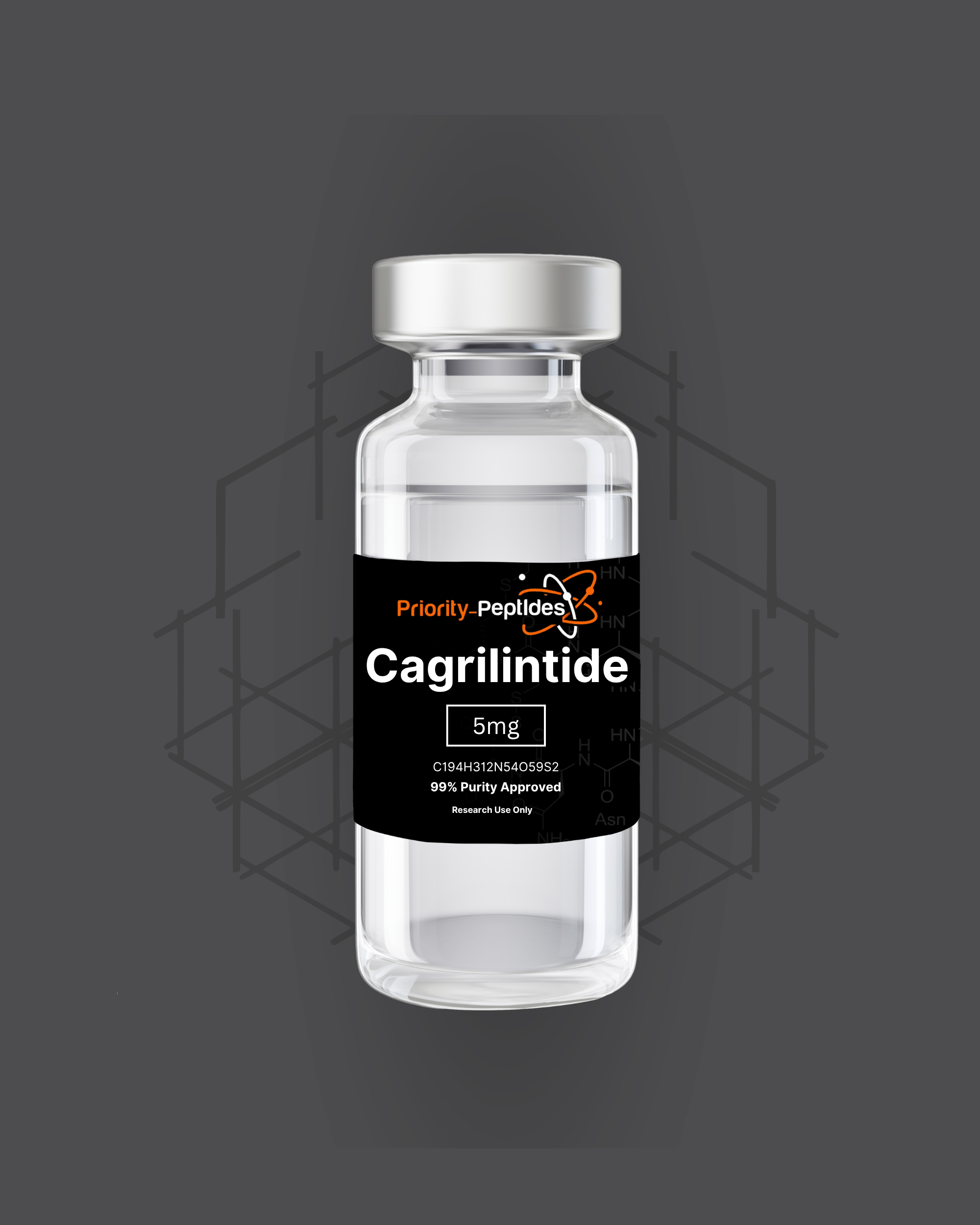
Cagrilintide 5mg
$34.99
Availability: 49 in stock
Cagrilintide is a novel, long-acting analog of amylin, a hormone co-secreted with insulin by pancreatic beta cells that plays a key role in regulating satiety and glucose metabolism. Developed as a therapeutic candidate for obesity and type 2 diabetes, Cagrilintide exhibits enhanced stability, receptor affinity, and a prolonged half-life compared to native amylin. Its ability to mimic and extend the physiological effects of amylin makes it a compelling subject for research into metabolic disorders.
Introducing Cagrilintide: A Long-Acting Amylin Analog for Metabolic Research
Introduction to Cagrilintide
Cagrilintide is a novel, long-acting analog of amylin, a hormone co-secreted with insulin by pancreatic beta cells that plays a key role in regulating satiety and glucose metabolism. Developed as a therapeutic candidate for obesity and type 2 diabetes, Cagrilintide exhibits enhanced stability, receptor affinity, and a prolonged half-life compared to native amylin. Its ability to mimic and extend the physiological effects of amylin makes it a compelling subject for research into metabolic disorders.
Chemical Structure and Properties
Cagrilintide is a synthetic peptide designed for high amylin receptor (AMY1-3) selectivity and metabolic stability. Specific structural modifications, including amino acid substitutions and a C-terminal fatty acid conjugation, enhance its resistance to enzymatic degradation and extend its circulating half-life.
- Molecular Formula: C₁₋₂₃H₃₈₂N₆₄O₆₈S₂
- Molecular Weight: Approximately 4913.05 g/mol
- Amino Acid Sequence:Lys-Cys-Asn-Thr-Ala-Thr-Cys-Ala-Thr-Gly-Ser-
Ala-Gly-Ser-Asn-Thr-Leu-Ser-Ser-Asn-Thr-Leu-Gly-Pro-Ser-Ser-Gly-
Ala-Pro-Pro-Pro-Ser-NH₂ - Chemical Modifications:
- Disulfide bond between cysteine residues to maintain structural integrity.
- C-terminal lipidation with a C20 fatty acid moiety for extended plasma
half-life.
These modifications enhance the properties of Cagrilintide, allowing it to activate amylin receptors effectively while ensuring prolonged therapeutic effects.
Mechanism of Action
Cagrilintide exerts its effects through the activation of the amylin receptor complex, influencing metabolic regulation via:
- Appetite Suppression: By acting on the hypothalamus, Cagrilintide enhances satiety, reducing food intake and promoting weight loss through signaling pathways associated with energy balance.
- Slowed Gastric Emptying: Similar to native amylin, Cagrilintide delays gastric emptying, which aids in modulating postprandial glycemic excursions and improving overall glucose control.
- Enhanced Insulin Action: While not a direct insulin secretagogue, its effects on appetite and gastric motility contribute to improved glycemic management, thus helping to stabilize blood glucose levels.
Potential Research Applications
Due to its unique pharmacological profile, Cagrilintide presents broad applications in
metabolic research:
- Obesity Studies: Research focuses on its ability to reduce body weight by decreasing caloric intake and increasing satiety in various populations.
- Type 2 Diabetes Management: Investigations assess its potential to complement GLP-1 receptor agonists, moving beyond traditional therapies to enhance glycemic control without increasing the risk of hypoglycemia.
- Combination Therapy Potential: Preclinical and clinical studies explore its synergistic effects with incretin-based therapies, such as semaglutide, enhancing overall efficacy in metabolic disease management.
- Neuroendocrine and Energy Metabolism Research: As amylin receptors are expressed in brain regions that govern energy balance, Cagrilintide may provide insights into the neurobiology of obesity and related metabolic disorders.
Future Directions in Research
Ongoing studies aim to deepen the understanding of Cagrilintides long-term effects, optimal dosing regimens, and its potential for combination therapy with other metabolic modulators. Animal and in vitro models continue to provide valuable insights into its receptor dynamics, metabolic impacts, and therapeutic versatility, paving the way for future clinical applications.
Disclaimer
This information is for research and educational purposes only. Cagrilintide is
not approved for human use and is intended solely for in vitro studies and
experimental applications.
Scientific References and Further Reading
1. Jensen, P. B., et al. (2021). Cagrilintide as a Novel Amylin Analog for the Treatment of Obesity and Diabetes. Nature Metabolism. https://www.nature.com/articles/s41574-021-00535-6
2. Lau, J., et al. (2022). Pharmacokinetics and Efficacy of Cagrilintide: A Long- Acting Amylin Analog. Diabetes, Obesity & Metabolism. https://dom-
pubs.onlinelibrary.wiley.com/doi/full/10.1111/dom.14876