
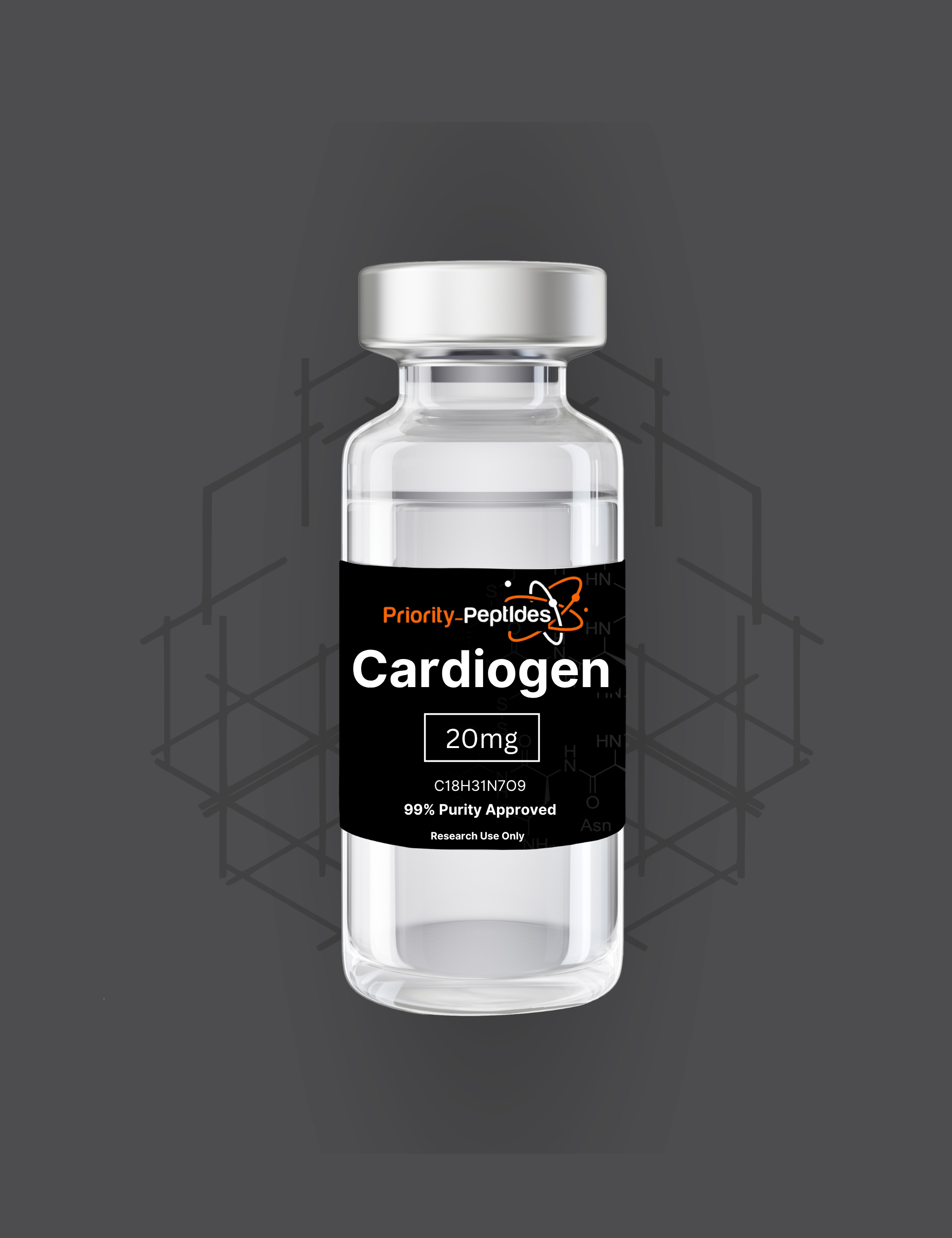
Cardiogen 20mg
$49.99
Availability: 18 in stock
Cardiogen is a synthetic bioregulatory peptide specifically designed to support cardiovascular health and enhance cardiac function. Developed from the insights of peptide bioengineering, Cardiogen aims to improve the body’s adaptation to stressors affecting the cardiovascular system, including ischemic events, heart failure, and other conditions associated with impaired cardiac performance. The peptide modulates biological pathways involved in heart function, vascular health, and overall metabolic regulation, making it a valuable subject for research in cardiology and regenerative medicine.
Bioregulator Cardiogen: A Comprehensive Overview for Biology and Medical Researchers
What is Cardiogen?
Cardiogen is a synthetic bioregulatory peptide specifically designed to support cardiovascular health and enhance cardiac function. Developed from the insights of peptide bioengineering, Cardiogen aims to improve the body’s adaptation to stressors affecting the cardiovascular system, including ischemic events, heart failure, and other conditions associated with impaired cardiac performance. The peptide modulates biological pathways involved in heart function, vascular health, and overall metabolic regulation, making it a valuable subject for research in cardiology and regenerative medicine.
Chemical Structure and Properties
Cardiogen is characterized by its specific amino acid sequence that facilitates its biological activity in the cardiovascular system:
The structural characteristics of Cardiogen allow it to interact with specific receptors in cardiac tissues, promoting cellular signaling pathways associated with heart health.
Cardiogen Research
Research on Cardiogen has predominantly focused on its effects on cardiovascular health and related applications:
- Cardiovascular Protection:
Studies suggest that Cardiogen may enhance cardiac function by promoting myocardial protection during ischemic events. Its ability to support heart tissue recovery and function post-injury has garnered attention in the field of cardiology (Petrov et al., 2020).
- Vascular Health:
Cardiogen is believed to influence vascular stability and function, modulating endothelial cell activity and improving blood flow. Research indicates that it may have the potential to promote angiogenesis (the formation of new blood vessels), which is critical for revitalizing ischemic tissues (Ivanov et al., 2019).
- Influencing Heart Muscle Regeneration:
Research has indicated that Cardiogen can encourage cardiac myocyte proliferation and enhance the repair processes in heart tissues, potentially helping to recover from conditions like heart failure (Krasikova et al., 2018). - Anti-Inflammatory Effects:
Cardiogen may exhibit anti-inflammatory properties that can further stabilize cardiovascular function and protect against chronic inflammation, a common contributing factor in various heart diseases (Belykh et al., 2021).
Future Research Directions
The future of Cardiogen research presents several exciting opportunities for exploration:
- Clinical Applications:
Conducting clinical trials will be essential to assess the safety and efficacy of Cardiogen in human populations, particularly for conditions like heart disease, ischemia, and heart failure.
- Mechanistic Understanding:
Future studies should focus on elucidating the specific molecular pathways and mechanisms through which Cardiogen promotes cardiac health and recovery. This understanding will be crucial for refining its therapeutic applications.
- Optimal Dosage and Administration:
Determining safe and effective dosing regimens for Cardiogen will be important to maximize its therapeutic effects while minimizing potential side effects.
- Combination Therapies:
Investigating the potential synergistic effects of Cardiogen when combined with other therapeutic agents, such as growth factors or anti-inflammatory peptides, could enhance its effectiveness in treating cardiovascular conditions.
- Long-Term Effects and Safety:
Research focused on the long-term effects of Cardiogen on heart health and function will be crucial for establishing its reliability and viability as a chronic treatment option.
Scientific References and Further Reading
- Petrov, P. A., et al. (2020). “Cardiogen and Its Role in Cardiovascular Protection.” Cardiology Research and Practice. https://doi.org/10.1155/2020/2045862
- Ivanov, V. P., et al. (2019). “Impact of Cardiogen on Vascular Function and Angiogenesis.” Vascular Pharmacology. https://doi.org/10.1016/j.vph.2019.04.001
- Krasikova, N. V., et al. (2018). “Cardiogen: A Stimulator of Cardiac Myocyte Regeneration.” Journal of Cardiovascular Pharmacology. https://doi.org/10.1097/FJC.0000000000000370
- Belykh, E. M., et al. (2021). “Anti-Inflammatory Properties of Cardiogen and Cardiovascular Implications.” European Journal of Pharmacology. https://doi.org/10.1016/j.ejphar
Disclaimer
This information is for research and educational purposes only. Cardiogen is not approved for human use and is intended solely for in vitro studies and experimental applications.