
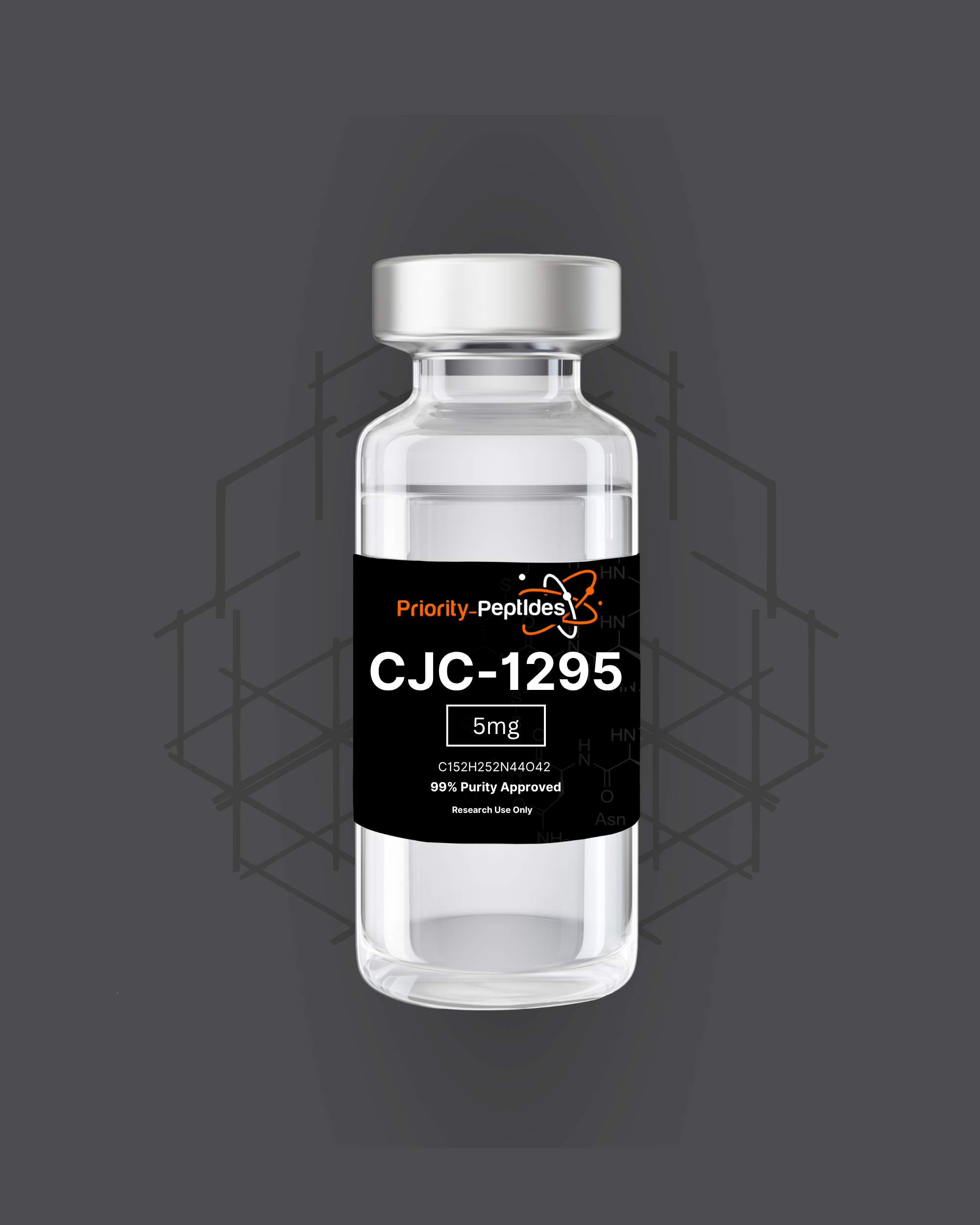
CJC-1295 No DAC 5mg
$26.99
Out of stock
CJC-1295 is a synthetic growth hormone-releasing hormone (GHRH) analog designed to stimulate the secretion of growth hormone (GH) from the pituitary gland over prolonged periods. Unlike endogenous GHRH, which has a short half-life, CJC-1295 is engineered for extended biological activity through bioconjugation with albumin, thereby increasing its half-life and potency. This characteristic makes CJC-1295 a valuable tool for researchers studying growth hormone dynamics, metabolism, and potential therapeutic applications in GH-related disorders.
What is CJC-1295 No DAC?
CJC-1295 No DAC, also known as Modified GRF (1-29), is a synthetic 29-amino-acid peptide analogue of growth hormone-releasing hormone (GHRH). It is modified to improve stability, reduce enzymatic degradation, and preserve the biological activity of native GHRH(1–29). The “No DAC” version excludes the Drug Affinity Complex (DAC) modification, which results in a shorter biological half-life that better mimics natural pulsatile growth hormone (GH) release. The peptide is designed specifically for short-term GH stimulation and is widely used in receptor-binding, GH axis stimulation, and cellular signaling assays.
CAS Number and Chemical Identity
- CAS Number: 863288-34-0
- Molecular Formula: C152H252N44O42
- Molecular Weight: 3367.9 g/mol
- Synonyms: Modified GRF 1-29, CJC-1295 (without DAC)
Amino Acid Sequence and Structure
Sequence (one-letter code):
Tyr-D-Ala-Asp-Ala-Ile-Phe-Thr-Gln-Ser-Tyr-Arg-Lys-Val-Leu-Ala-Gln-Leu-Ser-Ala-Arg-Lys-Leu-Leu-Gln-Asp-Ile-Leu-Ser-Arg-NH₂
CJC-1295 No DAC contains four amino acid substitutions at positions 2 (D-Ala), 8 (Gln), 15 (Ala), and 27 (Leu), enhancing its resistance to enzymatic degradation, particularly by dipeptidyl peptidase IV.
Mechanism of Action
CJC-1295 No DAC selectively binds to GHRH receptors on the anterior pituitary gland in vitro, stimulating the release of endogenous growth hormone in a manner that closely replicates physiological GH pulsatility. This short-acting format ensures that natural negative feedback mechanisms are preserved. It also induces downstream IGF-1 release in hepatic cells and other GH-responsive tissues. The peptide’s enhanced protease resistance allows for a stable yet short-lived pulse of GH secretion, which is important for studies requiring precise control over timing and dose-responsiveness.
Purported Research Benefits
While not approved for therapeutic use, CJC-1295 No DAC has shown the following benefits in laboratory settings:
- Enables study of growth hormone pulsatility without prolonged receptor saturation.
- Supports IGF-1 pathway activation in muscle, liver, and connective tissues.
- Enhances model systems for tissue regeneration and protein synthesis.
- Allows exploration of metabolic responses including glucose uptake, lipolysis, and insulin sensitivity.
- Provides a model for understanding circadian rhythms of GH release and endocrine regulation.
Research Applications
CJC-1295 No DAC is used in a wide range of in vitro applications, including:
- Pituitary cell assays measuring GH release kinetics.
- Hepatocyte or myoblast cultures for IGF-1 expression analysis.
- mTOR and Akt pathway studies related to muscle regeneration.
- Adipocyte and liver models for metabolic modulation.
- Endocrine rhythm and circadian biology in neuroendocrine cell systems.
- Comparative assays with other GHRH analogs and ghrelin mimetics like Ipamorelin.
Product Specifications
| Feature | Specification |
| Name | CJC-1295 No DAC |
| Peptide Type | Synthetic growth hormone-releasing hormone analog |
| Sequence Length | 29 amino acids |
| Molecular Formula | C152H252N44O42 |
| Molecular Weight | 3367.9 g/mol |
| Form | Lyophilized powder |
| Purity | ≥97% (by HPLC) |
| Recommended Storage | −20°C dry; 2–8°C after reconstitution |
| Solubility | Soluble in sterile water or bacteriostatic saline |
| Research Use | In vitro studies only |
Future Research Directions
- Optimization of GH pulse frequency and dose timing for tissue-specific models.
- Investigation into GH/IGF-1 regulation in diabetic or muscle-wasting conditions.
- Epigenetic and transcriptional profiling post-pulsatile exposure.
- Co-treatment studies with GHS-R agonists like Ipamorelin to investigate synergistic effects.
- Metabolic stress models exploring GH-induced changes in AMPK, mTOR, and insulin signaling.
References
- CJC-1295 No DAC product details and peptide specifications from Sigma-Aldrich and Bachem.
- GHRH receptor binding and GH release studies (PubMed, PMID: 17600190).
- Comparative studies on CJC-1295 with and without DAC modifications (PMC articles).
- Research reviews on short-acting GHRH analogs and their metabolic effects (NCBI).
- Mechanistic exploration of CJC-1295 No DAC in synergy with Ipamorelin in in vitro models.
Disclaimer
This product is intended for research purposes only. It is not approved for human or veterinary use, nor is it intended for clinical, diagnostic, or therapeutic applications. All research must comply with applicable local laws and institutional guidelines. Misuse of this compound for human consumption is strictly prohibited.