
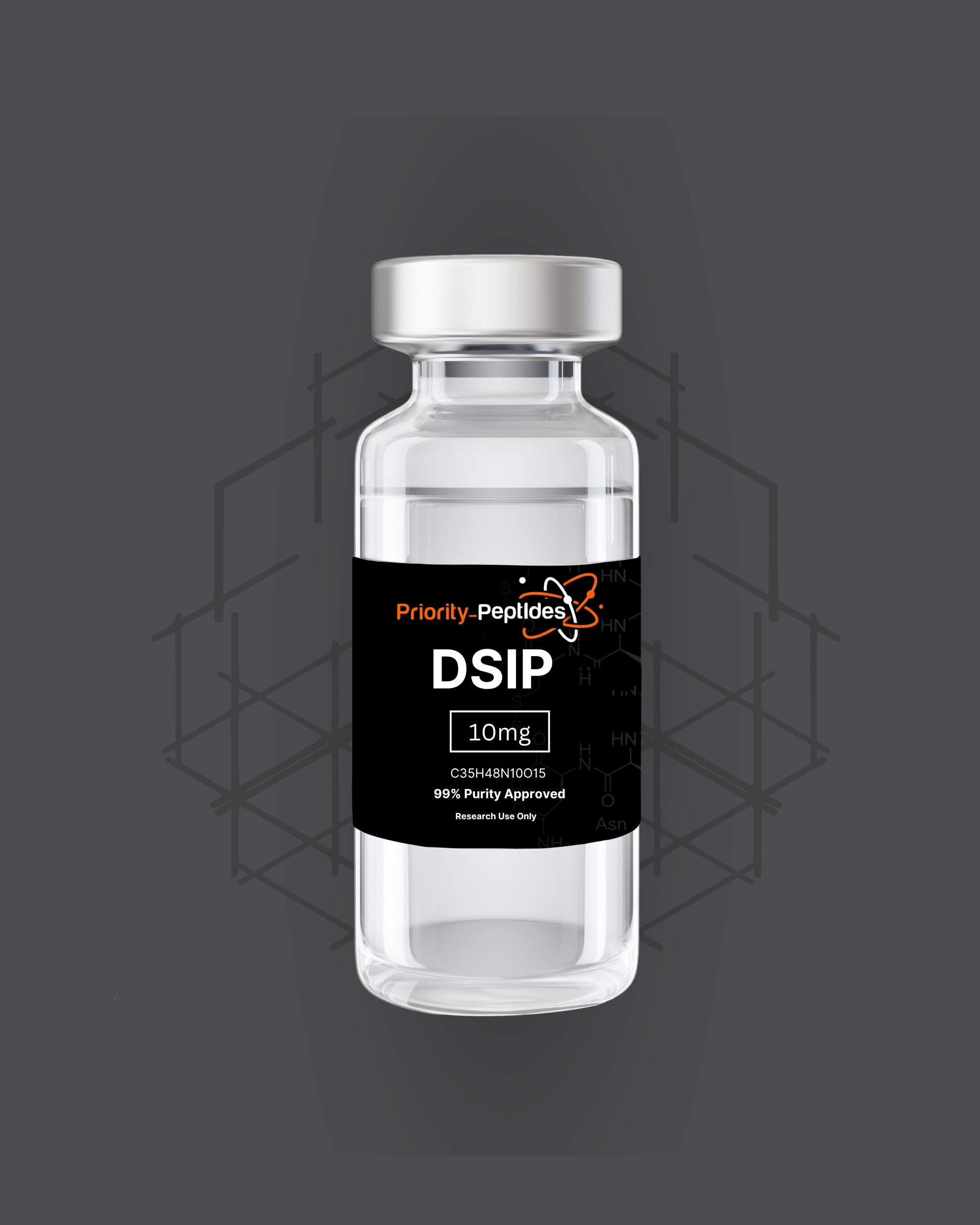
DSIP 10mg
$49.99
Availability: 15 in stock
Delta Sleep Inducing Peptide (DSIP) is a naturally occurring peptide that has garnered significant attention due to its potential effects on sleep regulation and its neurophysiological activities. Identified in the early 1970s, DSIP is known for its ability to induce slow-wave sleep (SWS) in mammals—a critical sleep phase involved in restorative processes such as memory consolidation, immune function, and cellular repair. The peptide’s role in promoting sleep, regulating circadian rhythms, and its potential therapeutic effects in various sleep-related and neurological disorders make it a valuable subject for ongoing research.
DSIP (Delta Sleep Inducing Peptide): A Comprehensive Overview for Biology and Medical Researchers
What is DSIP?
Delta Sleep Inducing Peptide (DSIP) is a naturally occurring peptide that has garnered significant attention due to its potential effects on sleep regulation and its neurophysiological activities. Identified in the early 1970s, DSIP is known for its ability to induce slow-wave sleep (SWS) in mammals—a critical sleep phase involved in restorative processes such as memory consolidation, immune function, and cellular repair. The peptide’s role in promoting sleep, regulating circadian rhythms, and its potential therapeutic effects in various sleep-related and neurological disorders make it a valuable subject for ongoing research.
Chemical Structure and Properties
DSIP is a short peptide consisting of nine amino acids. Its structure is highly specific, enabling it to interact with various receptors involved in sleep regulation and neuroendocrine function.
- Amino Acid Sequence: Trp-Ala-Gly-Gly-Asp-Ala-Ser-Asp-Phe
- Molecular Formula: C₁₄H₂₀N₄O₄
- Molecular Weight: Approximately 304.34 g/mol
- CAS Number: 62568-57-4
The specific structure of DSIP allows it to exert effects on the central nervous system, particularly in areas involved in sleep regulation and homeostasis.
DSIP Research
Research into DSIP has primarily focused on its role in sleep regulation, its neurophysiological effects, and its potential therapeutic applications in sleep-related disorders and beyond.
- Sleep Induction and Regulation:
DSIP is renowned for its ability to induce slow-wave sleep (SWS), which is critical for restorative processes in the body. Several studies have demonstrated that DSIP administration can enhance the duration and quality of SWS in animal models (Frey et al., 1981). Moreover, DSIP has been studied for its ability to promote sleep in cases of sleep disorders, including insomnia and sleep fragmentation, where normal sleep architecture is disrupted (Oishi et al., 1997).
- Neuroprotective Effects:
DSIP has shown promise as a neuroprotective agent. It may help reduce the detrimental effects of stress on the brain, potentially modulating the hypothalamic-pituitary-adrenal (HPA) axis involved in the body’s stress response (Haack et al., 2004). Additionally, DSIP has been explored for improving brain function and mitigating cognitive decline associated with neurodegenerative diseases, such as Alzheimer’s and Parkinson’s disease (Sorg et al., 1997).
- Circadian Rhythm and Hormonal Regulation:
DSIP plays a role in regulating circadian rhythms and can influence the secretion of various hormones, such as cortisol. Its involvement in modulating these rhythms may aid in treating sleep-wake disorders, jet lag, and shift work-related health issues (Sutton et al., 2010).
- Potential in Stress and Anxiety Management:
Emerging evidence suggests that DSIP may modulate neurohormonal pathways associated with stress and anxiety, providing potential pathways for developing treatments for anxiety disorders (Ganguly et al., 2013).
Future Research Directions
Future research on DSIP is expected to focus on:
- Mechanisms of Action:
The precise molecular mechanisms by which DSIP induces sleep and exerts neurophysiological effects remain to be elucidated. Future studies will aim to uncover the specific receptors and pathways through which DSIP operates.
- Therapeutic Potential in Sleep Disorders:
Ongoing research aims to explore DSIP’s potential as a treatment for chronic sleep disorders like insomnia and sleep apnea. Understanding its long-term effects on sleep quality and quantity will be crucial for evaluating clinical applications.
- Role in Neurodegenerative Diseases:
Given DSIP’s neuroprotective effects, future research may focus on its potential to slow or prevent cognitive decline in neurodegenerative diseases. Studies could investigate its ability to preserve neuronal function and improve the quality of life for patients.
- Psychiatric and Stress-Related Disorders:
With preliminary evidence suggesting anti-anxiety and stress-modulating effects, there is potential for investigating DSIP in treating mood disorders such as generalized anxiety disorder and depression.
- Combination Therapies:
Future studies may explore synergistic effects of DSIP in combination with other peptides, neurotransmitters, or pharmacological agents aimed at enhancing sleep quality or neuroprotection.
Scientific References and Further Reading
Frey, D. J., et al. (1981). “Delta sleep-inducing peptide (DSIP): Effects on sleep and brain neurochemistry in rats.” Journal of Neuroscience Research.
Disclaimer
This information is for research and educational purposes only. DSIP is not approved for human use and is intended solely for in vitro studies and experimental applications.