
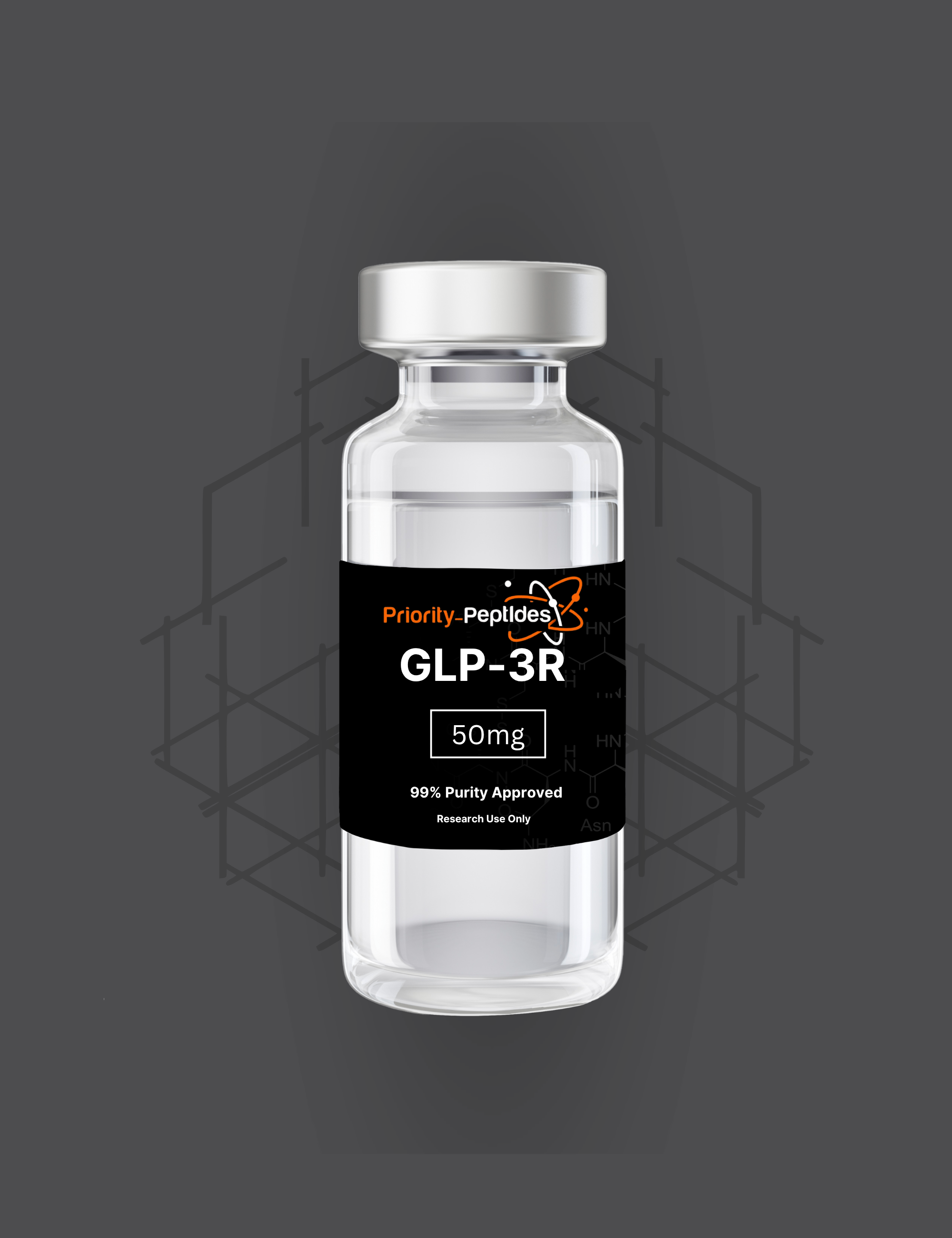
GLP-3R 50mg
$375.99
Availability: 20 in stock
GLP-3 is a novel investigational peptide designed as a triagonist that simultaneously activates the glucagon-like peptide-1 (GLP-1), glucose-dependent insulinotropic polypeptide (GIP), and glucagon receptors. This unique mechanism positions GLP-3 as a promising candidate for research focused on obesity, type 2 diabetes, and metabolic dysfunction. By engaging multiple receptors, GLP-3 is believed to offer enhanced metabolic benefits compared to single or dual agonist therapies, making it a focal point for scientific investigation.
Introducing GLP-3R: A Comprehensive Overview for Biology and Medical Researchers
What is GLP-3R?
GLP-3R is a novel investigational peptide designed as a triagonist that simultaneously activates the glucagon-like peptide-1 (GLP-1S), glucose-dependent insulinotropic polypeptide (GIP), and glucagon receptors. This unique mechanism positions GLP-3R as a promising candidate for research focused on obesity, type 2 diabetes, and metabolic dysfunction. By engaging multiple receptors, GLP-3R is believed to offer enhanced metabolic benefits compared to single or dual agonist therapies, making it a focal point for scientific investigation.
Chemical Structure and Properties
GLP-3R is a synthetic peptide engineered for high receptor selectivity, metabolic stability, and an extended half-life. Its amino acid sequence is as follows: Tyr-{Aib}-Gln-Gly-Thr-Phe-Thr-Ser-Asp-Tyr-Ser-Ile-{α-Me-Leu}-Leu-Asp-Lys-{diacid-C20-gamma-Glu-(AEEA)-Lys}-Ala-Gln-{Aib}-Ala-Phe-Ile-Glu-Tyr-Leu-Leu-Glu-Gly-Gly-Pro-Ser-Ser-Gly-Ala-Pro-Pro-Pro-Ser-NH
- {Aib}: Indicates α-aminoisobutyric acid, which enhances the peptide’s stability.
- {α-Me-Leu}: Represents α-methylleucine, a modification that affects the peptide’s binding properties.
- {diacid-C20-gamma-Glu-(AEEA)-Lys}: A lipidation moiety attached to lysine that extends the peptide’s half-life by promoting albumin binding.
The molecular formula for GLP-3R is C221H342N46O68, with a molecular weight of approximately 4731.34 g/mol. These chemical modifications enhance bioavailability and allow for prolonged metabolic effects, making GLP-3R a valuable tool for investigating the interactions between incretin and glucagon pathways.
GLP-3R Research
Significant research on GLP-3R has begun to elucidate its potential metabolic benefits:
Glycemic Control:
GLP-3R has been shown to improve blood glucose regulation by enhancing insulin secretion, decreasing glucagon release, and improving overall pancreatic function. Early studies indicate that it may outperform traditional GLP-1S receptor agonists in terms of efficacy (Jastreboff et al., 2023).
Weight Management:
Preliminary findings suggest that GLP-3R may effectively reduce body weight due to its ability to suppress appetite, enhance satiety, and increase energy expenditure. Studies are ongoing to quantify its impact on obesity management across diverse populations.
Cardiometabolic Effects:
The activation of GLP-1S, GIP, and glucagon receptors through GLP-3R may contribute to improvements in lipid profiles and overall cardiovascular health, reducing inflammation and improving heart function.
Liver Health:
With its shifting effects on lipid metabolism and glucagon receptor activation, GLP-3R is being researched for its potential role in treating non-alcoholic fatty liver disease (NAFLD) and non-alcoholic steatohepatitis (NASH), both of which are closely linked to metabolic syndrome.
Future Research Directions
Future studies aim to refine the understanding of GLP-3R’s pharmacodynamics and its long-term effects on metabolic health:
1.Mechanistic Insights:
Ongoing research should focus on the specific mechanisms through which GLP-3R activates the GLP-1S, GIP, and glucagon receptors, including intracellular signaling pathways and interactions with peripheral metabolic tissues.
2.Longitudinal Studies:
Extended studies will be crucial for evaluating the long-term efficacy and safety of GLP-3R , assessing its impacts on weight maintenance, blood glucose control, and potential side effects.
3.Investigation of Comorbidities:
Exploration of GLP-3R’s potential in addressing other metabolic disorders, including hypertension, dyslipidemia, and hypoglycemia, will expand its applicability in clinical contexts.
4.Combination Therapies:
Research may also investigate the efficacy of GLP-3R when used in conjunction with other metabolic agents, as combined mechanisms may yield improved outcomes for patients with complex metabolic profiles.
Conclusion
GLP-3R represents a significant advancement in metabolic therapy due to its multi-agonist profile and the potential to simultaneously address obesity and type 2 diabetes. As research progresses, GLP-3R may prove to be a valuable tool in the ongoing efforts to better understand and treat metabolic diseases.
Disclaimer
This information is for research and educational purposes only. GLP-3R is not approved for human use and is intended solely for in vitro studies and experimental applications.