
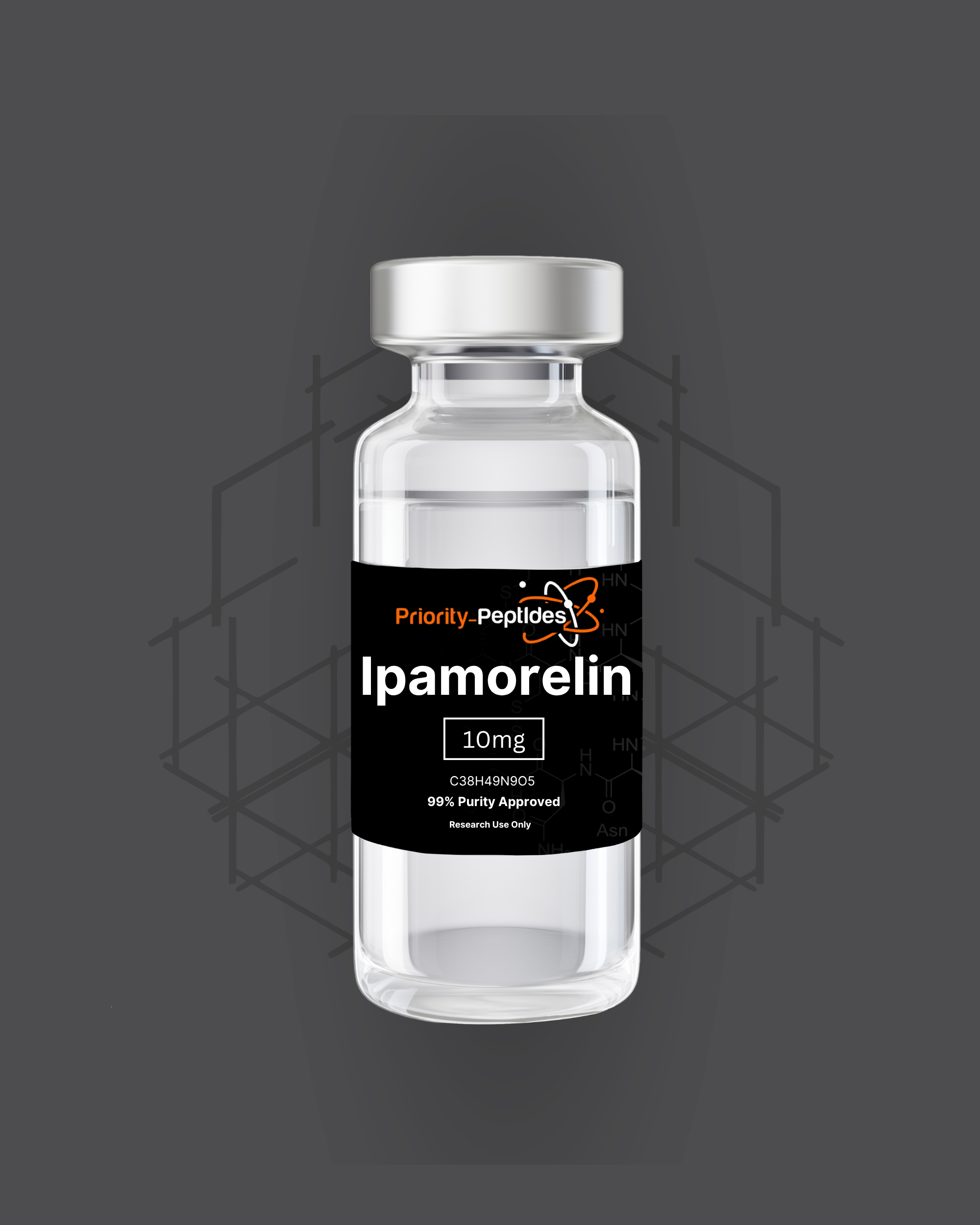
Ipamorelin 10mg
$49.99
Availability: 20 in stock
Ipamorelin is a synthetic peptide that functions as a Growth Hormone Secretagogue (GHS), specifically designed to stimulate the secretion of growth hormone (GH) from the anterior pituitary gland. It mimics the effects of ghrelin, the natural hormone that plays a significant role in hunger signaling and growth hormone regulation. Ipamorelin’s ability to selectively and effectively increase GH levels without notably impacting cortisol or prolactin makes it an invaluable tool for both biological and medical research.
Introducing Ipamorelin: A Comprehensive Overview for Biology and
Medical Researchers
What is Ipamorelin?
Ipamorelin is a synthetic peptide that functions as a Growth Hormone Secretagogue (GHS), specifically designed to stimulate the secretion of growth hormone (GH) from the anterior pituitary gland. It mimics the effects of ghrelin, the natural hormone that plays a significant role in hunger signaling and growth hormone regulation. Ipamorelin’s ability to selectively and effectively increase GH levels without notably impacting cortisol or prolactin makes it an invaluable tool for both biological and medical research.
Chemical Structure
Understanding the chemical structure of Ipamorelin is pivotal for researchers looking to explore its mechanisms and applications:
- Chemical Formula: C38H49N9O5
- Molecular Weight: 711.92 g/mol
- Amino Acid Sequence:
- Aib-His-D-2-Nal-Ala-Gly-NH2
Where:
- Aib (Alpha-aminoisobutyric acid): Enhances the peptides stability and resistance to enzymatic degradation, allowing for a longer duration of action. His (Histidine): An essential amino acid that plays a critical role in many biochemical processes including enzyme function and metabolism.
- D-2-Nal (D-2-Naphthylalanine): This amino acid substitution increases the binding affinity to GHS receptors, enhancing the peptides potency.
- Ala (Alanine): A vital amino acid involved in various physiological functions, particularly in protein synthesis and metabolism.
- Gly (Glycine): Contributes to neurotransmitter synthesis and is important for cellular integrity.
The specific pentapeptide structure facilitates Ipamorelin’s selective activation of GHSR (Growth Hormone Secretagogue Receptor), enabling researchers to investigate its effects within different biological systems.
Ipamorelin Research
A growing body of research demonstrates the physiological effects of Ipamorelin across various fields, highlighting its potential applications:
1. Stimulation of Growth Hormone Release:
Ipamorelin has been extensively studied for its capacity to induce GH secretion in vitro. Research shows that it activates GHSRs in human pituitary cells, leading to a marked increase in GH release, especially compared to other secretagogues such as GHRP-6 (Kumar et al., 2015).
2. Muscle Growth and Protein Anabolism:
Research indicates that Ipamorelin enhances protein synthesis in muscle cells, suggesting its utility in studies focusing on muscle hypertrophy and anabolic responses. This makes it relevant for investigating therapies for muscle-wasting conditions and promoting recovery after trauma (Mikhael et al., 2020).
3. Metabolic Regulation:
Studies have also investigated Ipamorelins role in the regulation of metabolism. It is shown to promote lipolysis, which could be utilized in research focused on obesity and metabolic syndrome. The effects on body composition are pivotal parts of ongoing metabolic studies.
4. Neuroprotective Effects:
Preliminary studies suggest a potential neuroprotective role of Ipamorelin, likely due to the influence of GH on neuronal health. This opens the door for research into neurodegenerative diseases and age-related cognitive decline, exploring how enhanced GH secretion might benefit various conditions (Berridge, 2011).
Future Research Directions
The future of Ipamorelin research presents numerous opportunities for exploration in both basic and applied medical sciences:
1. Mechanistic Exploration:
Further studies should aim to elucidate the signaling pathways activated by Ipamorelin in both endocrine and metabolic contexts. Understanding how it modulates GH signaling could provide insights for therapeutic applications.
2. Longer-Term Safety and Efficacy Studies:
Longitudinal studies examining the effects of Ipamorelin over extended periods are essential. These studies should focus on its impact on hormone levels, metabolic health, and potential long-term benefits or side effects.
3. Exploring Therapeutic Potential:
Investigating the therapeutic implications of Ipamorelin for treating GH deficiencies, muscle degenerative diseases, and metabolic disorders could expand its application in clinical settings.
4. Comparative Studies with Other Secretagogues:
Comparative research with other GH secretagogues and traditional GH treatments will help delineate the unique benefits of Ipamorelin, further informing its clinical relevance.
Conclusion
Ipamorelin represents a significant advancement in the research of growth hormone regulation, metabolic processes, and therapeutic potential. Its specific action, coupled with a favorable safety profile, positions it as a valuable compound for biology and medical researchers seeking to deepen our understanding of endocrine function and its systemic effects.
Disclaimer
This information is for research and educational purposes only. Ipamorelin is not approved for human use and is intended solely for in vitro studies and experimental applications.