
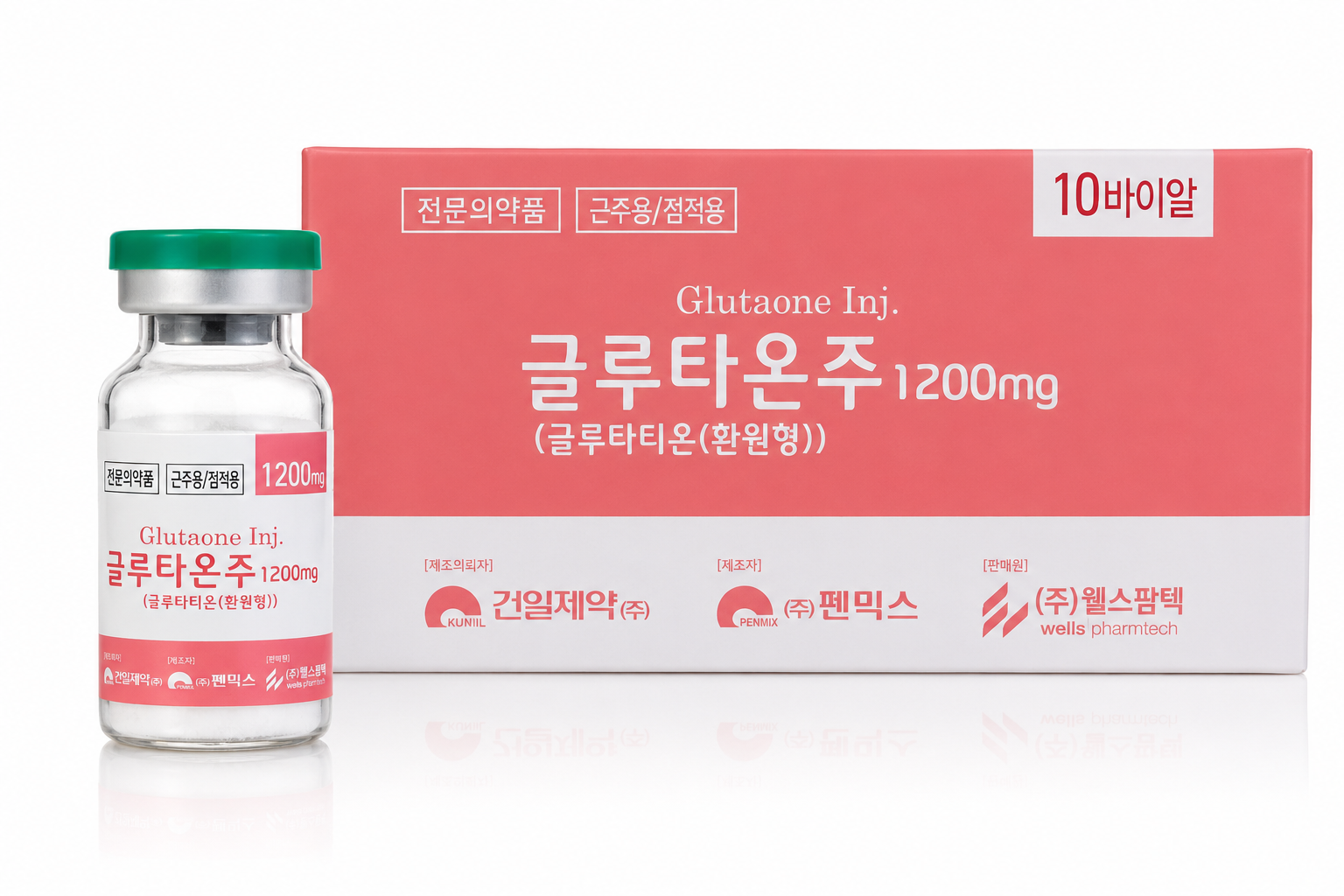
Korean Glutathione 1200mg
$64.99
Availability: 29 in stock
Glutathione is a tripeptide composed of three amino acids: cysteine, glycine, and glutamate. It is a critical antioxidant found in almost every cell in the body and plays a vital role in various biological processes, including detoxification, antioxidant defense, and the maintenance of cellular redox homeostasis. Glutathione exists in two forms: the reduced form (GSH) and the oxidized form (GSSG). The balance between these forms is essential for cellular health, making glutathione an important molecule for research in health, disease prevention, and aging.
High Purity Korean Glutathione (Reduced L-Glutathione, GSH)
Premium Research Grade Antioxidant Tripeptide for Redox Biology, Mitochondrial Function, and Cellular Stress Research
Korean Glutathione (Reduced L-Glutathione, GSH) is a highly purified research compound extensively utilized in studies involving oxidative stress, mitochondrial biology, cellular metabolism, toxicology, immunology, neuroscience, aging, oncology, and regenerative medicine. As one of the most abundant intracellular antioxidants found in mammalian cells, glutathione serves as a critical regulator of cellular redox homeostasis and represents one of the most extensively researched endogenous molecules in modern biomedical science.
South Korean manufacturers have earned a global reputation for producing exceptionally high purity glutathione through advanced pharmaceutical manufacturing processes, stringent quality controls, and sophisticated purification methodologies. Consequently, Korean sourced glutathione has become highly sought after among biological and medical researchers seeking consistency, purity, and reproducibility in laboratory investigations.
What Is Glutathione?
Glutathione (GSH) is a naturally occurring tripeptide composed of three amino acids:
- L-Glutamic Acid
- L-Cysteine
- Glycine
Unlike most peptides, glutathione contains a unique gamma-glutamyl bond between glutamic acid and cysteine rather than the conventional alpha peptide linkage. This distinctive structural feature contributes to its biological stability and functional importance.
Glutathione exists primarily in two forms:
- Reduced Glutathione (GSH)
- Oxidized Glutathione (GSSG)
The reduced form (GSH) is the biologically active form responsible for antioxidant activity and cellular redox regulation. Under physiological conditions, most intracellular glutathione exists in the reduced state, allowing cells to neutralize reactive oxygen species and maintain redox balance.
Chemical Information
Compound Name
Reduced L-Glutathione
Synonyms
- GSH
- Reduced Glutathione
- L-γ-Glutamyl-L-Cysteinylglycine
- Glutathione Reduced
CAS Number
70-18-8
Molecular Formula
C10H17N3O6S
Molecular Weight
307.32 g/mol
PubChem CID
124886
Chemical Classification
Tripeptide Antioxidant
InChIKey
RWSXRVCMGQZWBV-WDSKDSINSA-N
Amino Acid Sequence
Exact Amino Acid Sequence
γ-Glu-Cys-Gly
Three Letter Code
γ-Glu-Cys-Gly
Single Letter Representation
E-C-G
Structural Sequence
L-γ-Glutamyl-L-Cysteinylglycine
Unlike conventional peptides, glutathione utilizes a gamma-glutamyl linkage between glutamic acid and cysteine.
Chemical Structure
Structural Components
Glutathione consists of:
- Glutamic Acid
- Cysteine
- Glycine
The cysteine residue contains a reactive sulfhydryl (-SH) group that serves as the primary functional center responsible for glutathione’s antioxidant and redox activities.
Simplified representation:
γ-Glu – Cys(SH) – Gly
The thiol group readily donates electrons to reactive oxygen species and free radicals, allowing glutathione to function as one of the body’s primary intracellular reducing agents.
Why Is Korean Glutathione So Highly Sought After?
Researchers worldwide frequently seek Korean manufactured glutathione due to South Korea’s advanced biotechnology and pharmaceutical manufacturing infrastructure.
Advanced Manufacturing Standards
South Korea has become a global leader in:
- Peptide synthesis
- Pharmaceutical manufacturing
- Lyophilization technology
- Sterile production systems
- Biopharmaceutical quality assurance
Exceptional Purity
High quality Korean glutathione is often manufactured utilizing:
- Pharmaceutical grade raw materials
- Multi-stage purification processes
- High Performance Liquid Chromatography (HPLC)
- Mass Spectrometry verification
- Endotoxin screening
- Identity confirmation testing
Batch Consistency
Researchers performing oxidative stress and redox biology experiments require reproducible materials. Korean manufacturers have developed a reputation for producing highly consistent batches with minimal variability.
Global Research Acceptance
Korean sourced glutathione is utilized by academic laboratories, biotechnology companies, and pharmaceutical research organizations throughout North America, Europe, Asia, and Australia.
Mechanism of Action
Cellular Antioxidant Defense
Glutathione serves as one of the body’s primary intracellular antioxidants.
It directly neutralizes:
- Superoxide radicals
- Hydroxyl radicals
- Hydrogen peroxide
- Lipid peroxides
- Reactive nitrogen species
This activity helps prevent oxidative damage to:
- DNA
- RNA
- Proteins
- Cellular membranes
- Mitochondria
Glutathione Peroxidase System
Glutathione functions as the primary substrate for glutathione peroxidase enzymes.
The reaction can be summarized as:
2 GSH + H₂O₂ → GSSG + 2 H₂O
This enzymatic system plays a central role in detoxifying hydrogen peroxide and protecting cells from oxidative injury.
Redox Signaling Regulation
Beyond simple antioxidant activity, glutathione functions as a key regulator of cellular signaling pathways.
Research has demonstrated involvement in:
- Gene expression regulation
- Signal transduction
- Protein folding
- Cell cycle control
- Cellular stress adaptation
Changes in the intracellular GSH:GSSG ratio serve as important indicators of cellular redox status.
Mitochondrial Protection
Mitochondria continuously generate reactive oxygen species during oxidative phosphorylation.
Glutathione supports:
- Electron transport chain integrity
- ATP production efficiency
- Mitochondrial membrane stability
- Prevention of oxidative mitochondrial damage
This has made glutathione a cornerstone molecule in mitochondrial biology research.
Xenobiotic Detoxification
Glutathione serves as a substrate for Glutathione S Transferase (GST) enzymes.
These enzymes facilitate:
- Drug metabolism
- Heavy metal detoxification
- Environmental toxin processing
- Electrophilic compound neutralization
The glutathione detoxification pathway remains one of the most extensively studied defense mechanisms in cellular toxicology.
Immune System Modulation
Research suggests glutathione influences numerous immune functions including:
- T cell activation
- Macrophage activity
- Cytokine signaling
- Inflammatory responses
- Cellular stress adaptation
Immune cells maintain high intracellular glutathione concentrations, highlighting its importance in immunological research.
Research Applications
Oxidative Stress Research
Glutathione is commonly utilized in studies involving:
- Free radical biology
- Oxidative damage mechanisms
- Antioxidant defense systems
- Cellular stress responses
Mitochondrial Research
Investigators frequently study glutathione’s role in:
- Bioenergetics
- ATP production
- Mitochondrial dysfunction
- Mitochondrial aging
Neuroscience Research
Glutathione has become an important research tool in studies examining:
- Neuroinflammation
- Oxidative neuronal injury
- Mitochondrial dysfunction
- Cellular resilience mechanisms
Cancer Research
Researchers investigate glutathione’s involvement in:
- Tumor metabolism
- Chemotherapy resistance
- Cellular survival pathways
- Redox adaptation
Toxicology Research
Glutathione is frequently employed in:
- Drug toxicity models
- Heavy metal studies
- Environmental toxicology
- Hepatic metabolism research
Stem Cell Research
Current investigations examine glutathione’s role in:
- Cellular differentiation
- Stem cell survival
- Redox regulation
- Regenerative biology
Chemical Modifications and Related Analogs
Numerous glutathione derivatives have been developed for research purposes.
Examples include:
Oxidized Glutathione (GSSG)
The oxidized disulfide form produced following antioxidant activity.
S-Acetyl Glutathione
An acetylated derivative often utilized in transport and stability research.
Glutathione Amide
A modified analog investigated for enhanced stability and redox activity.
PEGylated Glutathione
Polyethylene glycol conjugated variants developed for pharmacokinetic investigations.
Liposomal Glutathione Systems
Encapsulation technologies utilized for cellular uptake studies.
Fluorescent Glutathione Probes
Specialized tools used to monitor intracellular redox dynamics.
Future Research Directions
Glutathione continues to attract significant scientific interest across multiple disciplines.
Precision Redox Biology
Researchers are increasingly exploring glutathione as a biomarker of cellular health, stress adaptation, and disease progression.
Mitochondrial Targeting Technologies
Novel delivery systems are being developed to selectively increase mitochondrial glutathione concentrations.
Nanotechnology Applications
Glutathione functionalized nanoparticles are under investigation for targeted delivery systems and advanced biomaterials.
Aging and Longevity Research
Glutathione depletion is increasingly recognized as a contributor to age related cellular dysfunction and mitochondrial decline.
Neurodegenerative Disease Models
Growing research efforts focus on understanding glutathione’s influence on neuronal resilience and neuroinflammatory processes.
Cellular Senescence Research
Scientists continue investigating glutathione’s role in maintaining cellular function during aging and chronic stress.
References
PubChem Compound Database (Glutathione)
https://pubchem.ncbi.nlm.nih.gov/compound/Glutathione
National Center for Biotechnology Information (NCBI)
https://www.ncbi.nlm.nih.gov/pccompound/124886
HumanCyc Glutathione Redox Pathway
https://biocyc.org/HUMAN/NEW-IMAGE?type=PATHWAY&object=PWY-4081
MetaCyc Glutathione Detoxification Pathway
https://metacyc.org/META/NEW-IMAGE?type=PATHWAY&object=PWY-4061
Royal Society of Chemistry Review
https://pubs.rsc.org/en/content/articlelanding/2025/sc/d4sc08599j
Antioxidants Journal Review
https://www.mdpi.com/2076-3921/7/5/62
Glutathione and Aging
https://pmc.ncbi.nlm.nih.gov/articles/PMC4684116
Glutathione and Mitochondrial Function
https://pmc.ncbi.nlm.nih.gov/articles/PMC3155927
Glutathione and Cancer Biology
https://pmc.ncbi.nlm.nih.gov/articles/PMC8199607
Glutathione and Immunity
https://pmc.ncbi.nlm.nih.gov/articles/PMC6389332
Glutathione and Neurodegenerative Disease Research
https://pmc.ncbi.nlm.nih.gov/articles/PMC4856054
Research Use Disclaimer
This product is intended for research purposes only. It is not approved for human or veterinary use, nor is it intended for clinical, diagnostic, or therapeutic applications. All research must comply with applicable local laws and institutional guidelines. Misuse of this compound for human consumption is strictly prohibited.