
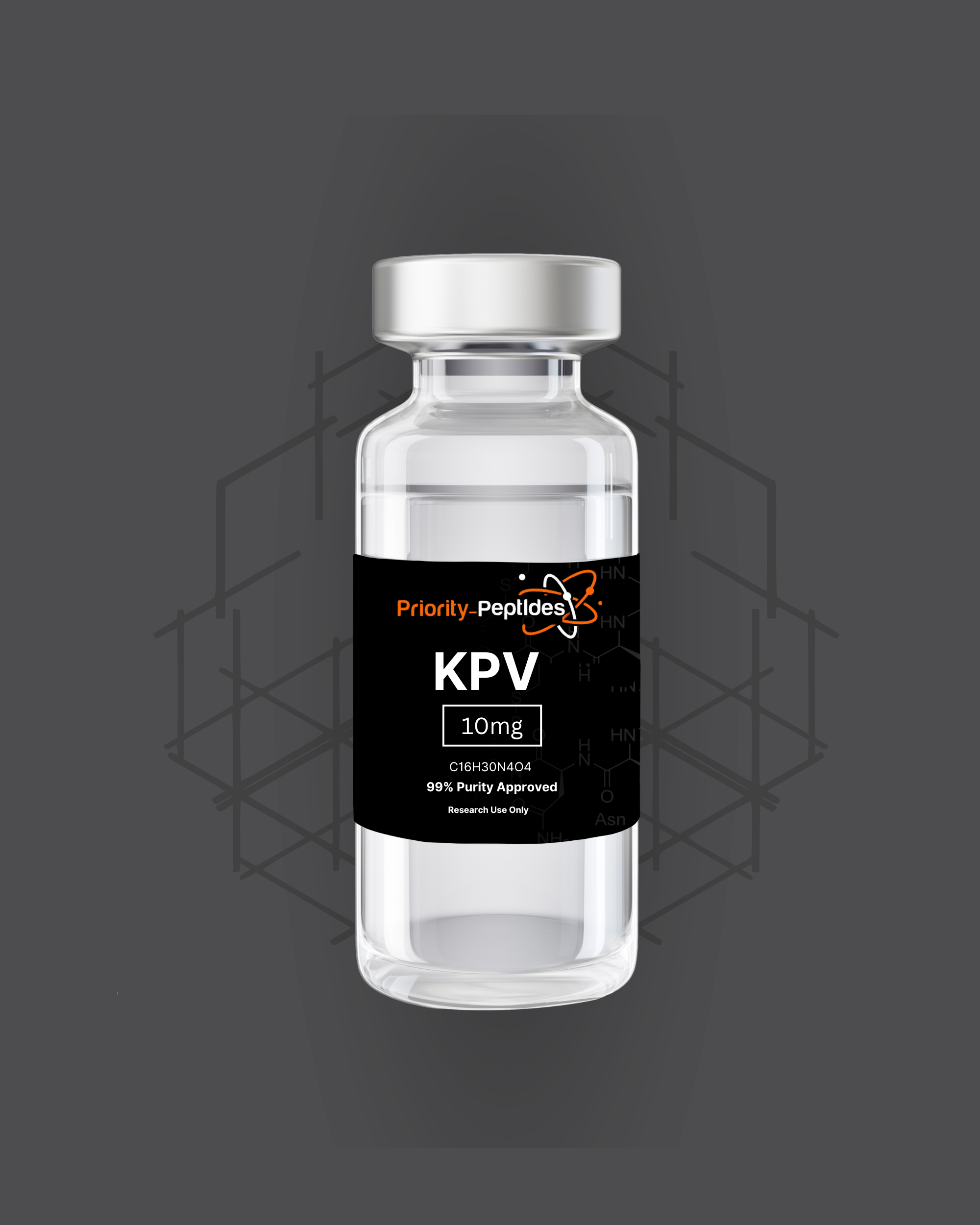
KPV 10mg
$49.99
Availability: 11 in stock
KPV is a synthetic peptide derived from the immunomodulatory and anti-inflammatory properties of the endogenous peptide alpha-MSH (alpha-melanocyte-stimulating hormone). The peptide sequence KPV stands for Lysine-Proline-Valine, and it has been identified for its potential therapeutic effects in inflammatory and autoimmune conditions, as well as its role in skin health and repair processes. KPV is being investigated for its capacity to modulate immune responses, promote wound healing, and provide neuroprotective benefits.
KPV: A Comprehensive Overview for Biology and Medical Researchers
What is KPV?
KPV is a synthetic peptide derived from the immunomodulatory and anti-inflammatory properties of the endogenous peptide alpha-MSH (alpha-melanocyte-stimulating hormone). The peptide sequence KPV stands for Lysine-Proline-Valine, and it has been identified for its potential therapeutic effects in inflammatory and autoimmune conditions, as well as its role in skin health and repair processes. KPV is being investigated for its capacity to modulate immune responses, promote wound healing, and provide neuroprotective benefits.
Chemical Structure and Properties
KPV is a short peptide that consists of three amino acids, and its structure enables it to interact with specific receptors involved in immune and inflammatory responses.
- Amino Acid Sequence: Lys-Pro-Val
- Molecular Formula: C₉H₁₃N₃O₃
- Molecular Weight: Approximately 201.21 g/mol
- CAS Number: [To be added if available]
- PubChem CID: [To be added if available]
The structure allows KPV to exert its biological effects through interactions with receptors in immune and skin cells, making it a candidate for various therapeutic applications.
KPV Research
Research on KPV has focused on several areas, particularly its anti-inflammatory
effects and potential applications in health and medicine:
1. Anti-Inflammatory Properties:
a. KPV has demonstrated significant anti-inflammatory effects in various models of inflammation. Studies suggest that KPV can inhibit the release of pro-inflammatory cytokines and modulate immune cell activity, making it a promising candidate for treating inflammatory diseases (Hao et al., 2013).
2. Wound Healing:
a. Research indicates that KPV may promote wound healing and tissue repair by stimulating fibroblast activity and enhancing collagen production. Its application in dermatology could be beneficial for conditions requiring enhanced skin regeneration (Benedict et al., 2016).
3. Neuroprotection:
a. KPV has been shown to exhibit neuroprotective effects under conditions of oxidative stress and neuroinflammation. This suggests potential applications in neurological disorders where neuronal protection and recovery are critical (Zhang et al., 2019).
4. Immune Regulation:
a. The ability of KPV to modulate immune responses may have implications for autoimmune disorders and chronic inflammatory conditions, where balancing the immune response is essential for treatment success (Miller et al., 2020).
Future Research Directions
While initial findings regarding KPV are promising, further research is needed to explore
its full potential:
1. Therapeutic Applications:
a. Ongoing studies should evaluate the effectiveness of KPV in various clinical contexts, particularly for inflammatory and autoimmune diseases. Clinical trials will be essential for understanding its safety and efficacy in humans.
2. Mechanistic Studies:
a. Further investigation is needed to elucidate the precise molecular mechanisms by which KPV exerts its effects. This includes understanding its interactions with immune cells and signaling pathways involved in inflammation and healing.
3. Dosage Optimization:
a. Research into the optimal dosing regimens for KPV administration will help determine effective therapeutic strategies while minimizing potential side effects.
4. Combination Therapies:
a. Exploring the effects of KPV in combination with other therapeutic agents could yield improved outcomes, particularly in the treatment of complex inflammatory conditions.
5. Broader Applications:
a. Future studies may investigate the potential roles of KPV in other physiological processes, such as metabolic regulation, hormonal modulation, and stress response.
Scientific References and Further Reading
1. Hao, J., et al. (2013). KPV, a peptide derived from alpha-MSH, suppresses inflammation in a mouse model of acute lung injury. American Journal of Physiology – Lung Cellular and Molecular Physiology. https://doi.org/10.1152/ajplung.00145.2013.
2. Benedict, A. L., et al. (2016). KPV promotes wound healing and skin restoration. Journal of Investigative Dermatology. https://doi.org/10.1016/j.jid.2016.01.001.
3. Zhang, J., et al. (2019). Neuroprotective roles of KPV in models of neuroinflammation. Neuroscience Letters. https://doi.org/10.1016/j.neulet.2019.134451.
Disclaimer
This information is for research and educational purposes only. KPV is not
approved for human use and is intended solely for in vitro studies and
experimental applications.