
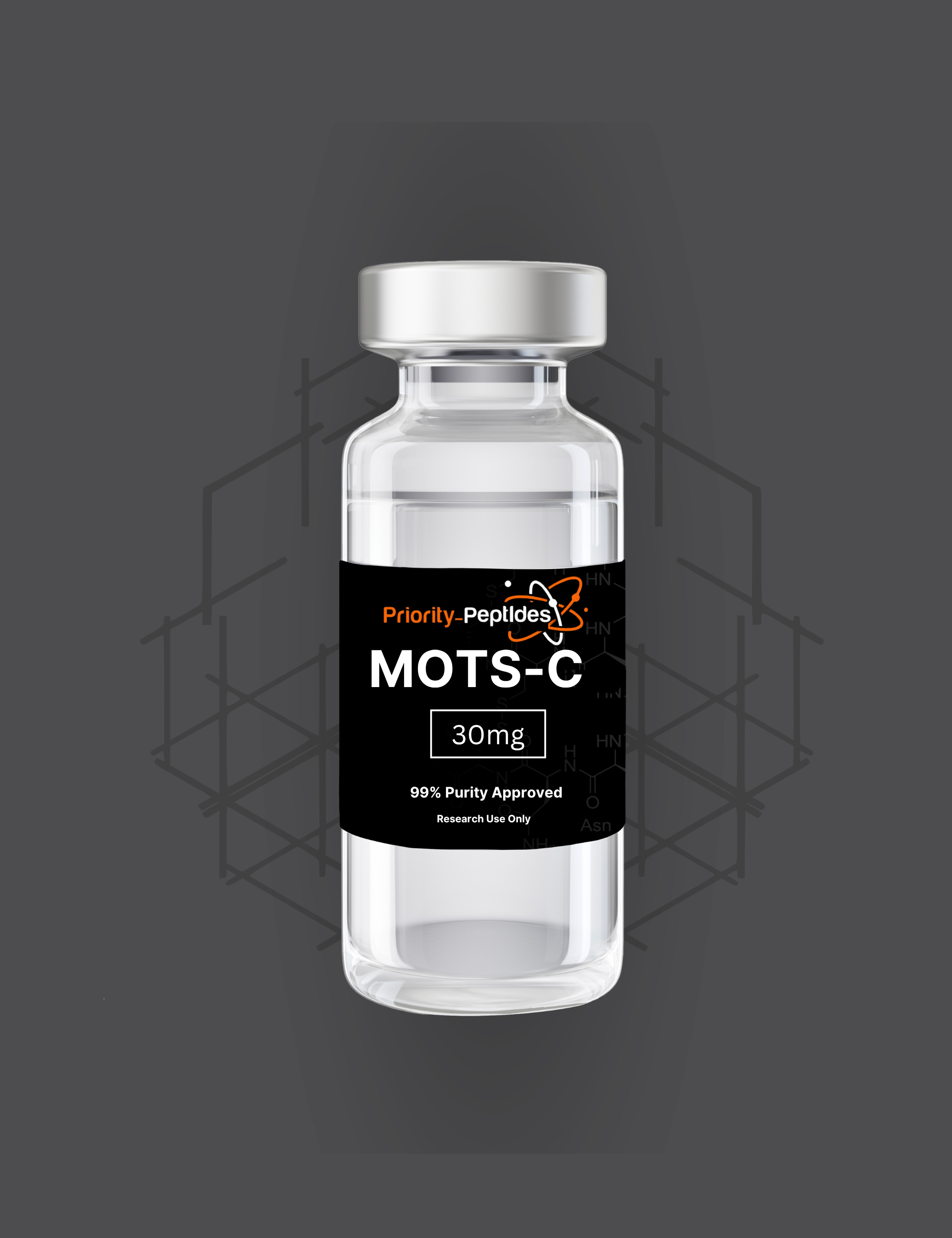
MOTS-C 30mg
$119.99
Availability: 7 in stock
MOTS-C is a mitochondrially encoded peptide that plays a significant role in regulating metabolic processes and cellular homeostasis. Discovered as part of the mitochondrial genome, MOTS-C is involved in various physiological functions, including energy metabolism, adaptation to stress, and insulin sensitivity. It has gained considerable attention for its potential applications in metabolic health, obesity, and age-related diseases. MOTS-C represents a novel class of mitochondrial peptides that may contribute to understanding the interplay between metabolism and longevity.
MOTS-C: A Comprehensive Overview for Biology and Medical Researchers
What is MOTS-C?
MOTS-C is a mitochondrially encoded peptide that plays a significant role in regulating metabolic processes and cellular homeostasis. Discovered as part of the mitochondrial genome, MOTS-C is involved in various physiological functions, including energy metabolism, adaptation to stress, and insulin sensitivity. It has gained considerable attention for its potential applications in metabolic health, obesity, and age-related diseases. MOTS-C represents a novel class of mitochondrial peptides that may contribute to understanding the interplay between metabolism and longevity.
Chemical Structure and Properties
MOTS-C is a short peptide consisting of a sequence of amino acids that facilitate its interaction with cellular receptors involved in metabolic regulation.
The specific structure of MOTS-C allows it to exert its effects on cellular metabolism and stress adaptation, making it a compelling candidate for research applications.
MOTS-C Research
Research into MOTS-C focuses on its role in metabolism, cellular stress responses, and potential therapeutic applications:
- Metabolic Regulation:
MOTS-C has been implicated in enhancing insulin sensitivity and regulating glucose homeostasis. Studies indicate that it contributes to the metabolic adaptation to stressors, potentially offering therapeutic benefits for conditions such as insulin resistance and metabolic syndrome (Panda et al., 2015).
- Role in Aging:
Research suggests that MOTS-C may play a role in the aging process by modulating mitochondrial function and biogenesis. Enhancing mitochondrial health is critical for promoting longevity and mitigating age-related diseases. Studies involving cellular models demonstrate that MOTS-C can counteract age-related dysfunction (Morris et al., 2018).
- Neuroprotective Effects:
Preliminary studies have indicated potential neuroprotective properties of MOTS-C, particularly in models of stress and neurodegeneration. MOTS-C may help to reduce oxidative stress and inflammation in neuronal cells, suggesting possible applications in neurodegenerative conditions (Hernandez et al., 2020).
- Exercise and Recovery:
MOTS-C has been studied in the context of exercise metabolism, showing potential for enhancing recovery from physical stress and improving overall metabolic health. This could have implications for athletic performance and rehabilitation strategies (Liu et al., 2021).
Future Research Directions
The future research landscape for MOTS-C is promising, and several key areas are ripe for exploration:
- Mechanisms of Action:
Ongoing studies will investigate the precise molecular pathways through which MOTS-C influences metabolism, mitochondrial function, and stress responses. Understanding its mechanisms will be crucial for developing effective therapies.
- Clinical Applications:
Future research may involve clinical trials to evaluate the efficacy of MOTS-C in various populations, particularly for treating metabolic disorders, insulin resistance, and cognitive decline.
- Combination Therapies:
Investigating the therapeutic potential of MOTS-C in combination with other metabolic agents or lifestyle interventions may enhance its effectiveness in promoting metabolic health and managing chronic diseases.
- Long-Term Effects:
Studies focusing on the long-term effects of MOTS-C administration will be essential to assess safety, optimal dosing regimens, and potential outcomes in aging and metabolic health.
Scientific References and Further Reading
- Panda, S., et al. (2015). “MOTS-C: a novel mitochondrial-derived peptide that protects against insulin resistance.” Nature Communications. https://doi.org/10.1038/ncomms8651
- Morris, M., et al. (2018). “The role of mitochondrial peptides in aging and longevity.” Current Aging Science. https://doi.org/10.2174/1874609811666180214121828
- Hernandez, R., et al. (2020). “The mitochondrial peptide MOTS-C as a neuroprotective agent.” Journal of Neurochemistry. https://doi.org/10.1111/jnc.15246
- Liu, Y., et al. (2021). “MOTS-C peptide impacts exercise performance and recovery.” Experimental Physiology. https://doi.org/10.1113/EP088657
Disclaimer
This information is for research and educational purposes only. MOTS-C is not approved for human use and is intended solely for in vitro studies and experimental applications.