
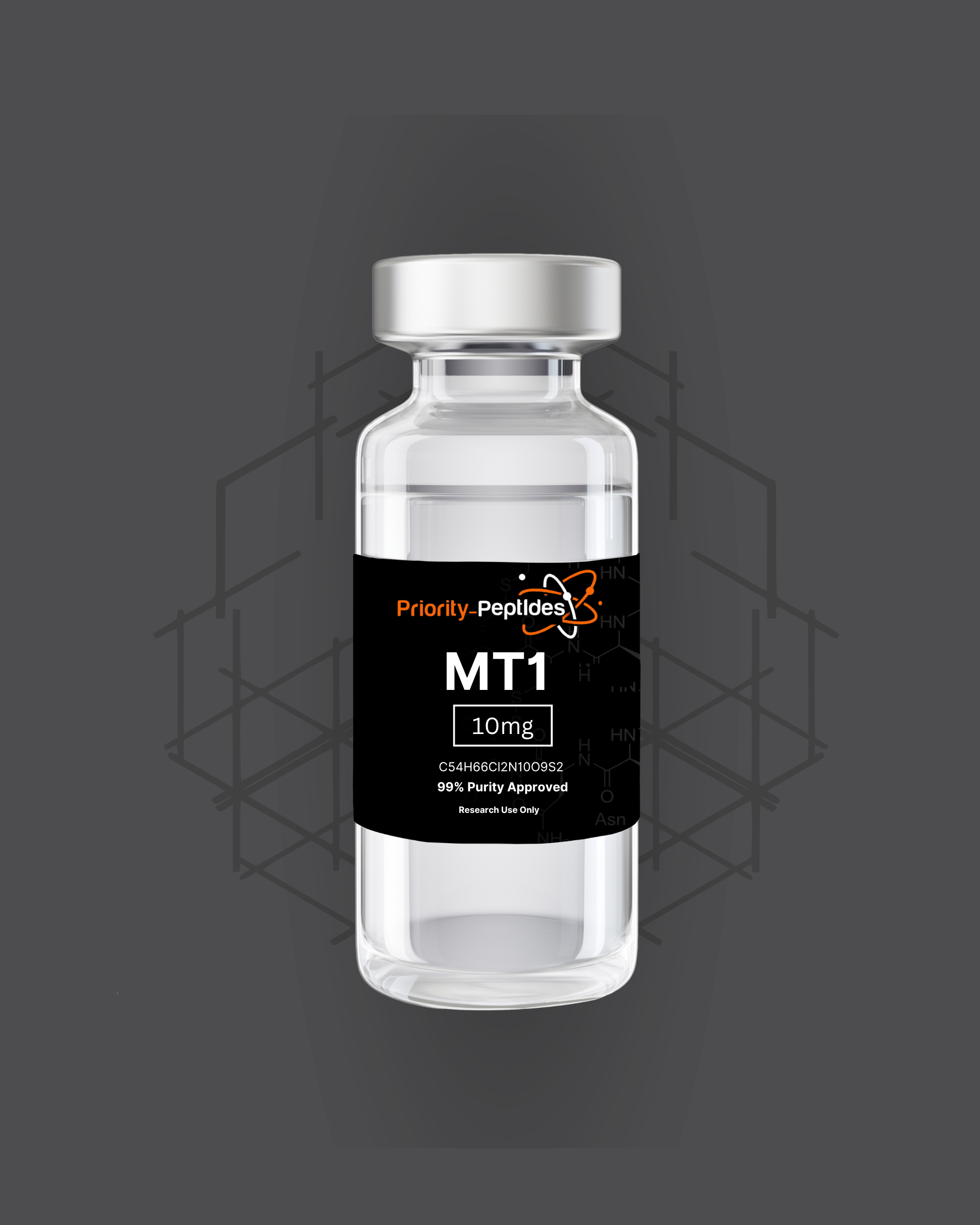
MT-1 10mg
$39.99
Availability: 19 in stock
Melanotan 1 (MT-1) is a synthetic peptide that serves as a potent agonist of the melanocortin receptors, specifically the melanocortin-1 receptor (MC1R), which is primarily responsible for regulating skin pigmentation. Originally developed as a research compound to promote tanning without exposure to ultraviolet (UV) radiation, MT-1 enhances the production of melanin in the skin. As a result, it has garnered interest not only for its cosmetic applications but also for potential therapeutic implications in conditions related to skin health, such as photoprotection and potentially in metabolic regulation.
Melanotan 1 (MT-1): A Comprehensive Overview for Biology and Medical Researchers
What is Melanotan 1 (MT-1)?
Melanotan 1 (MT-1) is a synthetic peptide that serves as a potent agonist of the melanocortin receptors, specifically the melanocortin-1 receptor (MC1R), which is primarily responsible for regulating skin pigmentation. Originally developed as a research compound to promote tanning without exposure to ultraviolet (UV) radiation, MT-1 enhances the production of melanin in the skin. As a result, it has garnered interest not only for its cosmetic applications but also for potential therapeutic implications in conditions related to skin health, such as photoprotection and potentially in metabolic regulation.
Chemical Structure and Properties
Melanotan 1 is a linear peptide composed of several amino acids organized in a specific sequence that allows for its activity at melanocortin receptors.
- Amino Acid Sequence: Ac-Nle-c[Asp-His-D-Phe-Arg-Trp]-NH2
- Molecular Formula: C₃₁H₄₃N₉O₆
- Molecular Weight: Approximately 573.70 g/mol
- CAS Number: 75921-69-6
- PubChem CID: [To be added if available]
The chemical properties of Melanotan 1 facilitate its ability to interact with melanocortin receptors and modify melanin production effectively.
Melanotan 1 (MT-1) Research
Research on Melanotan 1 has focused on several important areas, particularly its
effects on pigmentation and potential health benefits:
1. Tanning and Skin Pigmentation: Studies have shown that MT-1 effectively stimulates melanin production in
human skin, providing a means of achieving tanning without the health risks associated with UV exposure. Clinical trials have demonstrated that MT-1 can significantly increase skin pigmentation levels in various skin types (Dorrington et al., 2003).
2. Photoprotection:
a. Melanotan 1 has been explored for its protective effects against UV- induced skin damage. By increasing melanin levels, this peptide may help reduce the risk of skin cancers and other UV-related conditions, offering therapeutic applications in dermatology (Ramsden et al., 2012).
3. Metabolic Effects:
a. Ongoing studies have investigated the potential metabolic effects of Melanotan 1, specifically its influence on appetite regulation and fat metabolism, given its activity on melanocortin receptors that are involved in energy homeostasis (Huszar et al., 1997).
4. Potential Use in Hypopigmentation Disorders:
a. There is potential for Melanotan 1 to be used in the treatment of conditions characterized by reduced skin pigmentation, such as vitiligo and albinism, by stimulating melanin production and restoring skin color (Dorrington et al., 2003).
Future Research Directions
Future studies on Melanotan 1 are expected to focus on several key areas:
1. Clinical Applications:
a. Investigating the safety and efficacy of Melanotan 1 in clinical settings, particularly for treatments related to pigmentation disorders, skin protection, and potential metabolic effects.
2. Mechanistic Studies:
a. Further detailing the mechanisms through which Melanotan 1 exerts its effects on melanocortin receptors, exploring pathways involved in pigmentation, metabolic regulation, and potential neuroprotective effects.
3. Optimal Dosage and Safety Profile:
a. Determining safe and effective dosing regimens through further preclinical and clinical trials aimed at understanding long-term effects.
4. Combination Therapies:
a. Researching the potential for Melanotan 1 to be used in combination with other therapeutic agents to enhance effects or provide comprehensive treatments for skin-related disorders or metabolic syndromes.
Scientific References and Further Reading
1. Dorrington, J. H., et al. (2003). The effect of the melanocortin 1 receptor agonist
on skin pigmentation. Journal of Investigative Dermatology.
https://doi.org/10.1046/j.1523-1747.2003.12689.x
2. Ramsden, C. H., et al. (2012). Modeling the effects of melanocortin peptides on
skin pigmentation. Photochemistry and Photobiology.
https://doi.org/10.1111/j.1751-1097.2012.01030.x
Disclaimer
This information is for research and educational purposes only. Melanotan 1
(MT-1) is not approved for human use and is intended solely for in vitro studies
and experimental applications.