
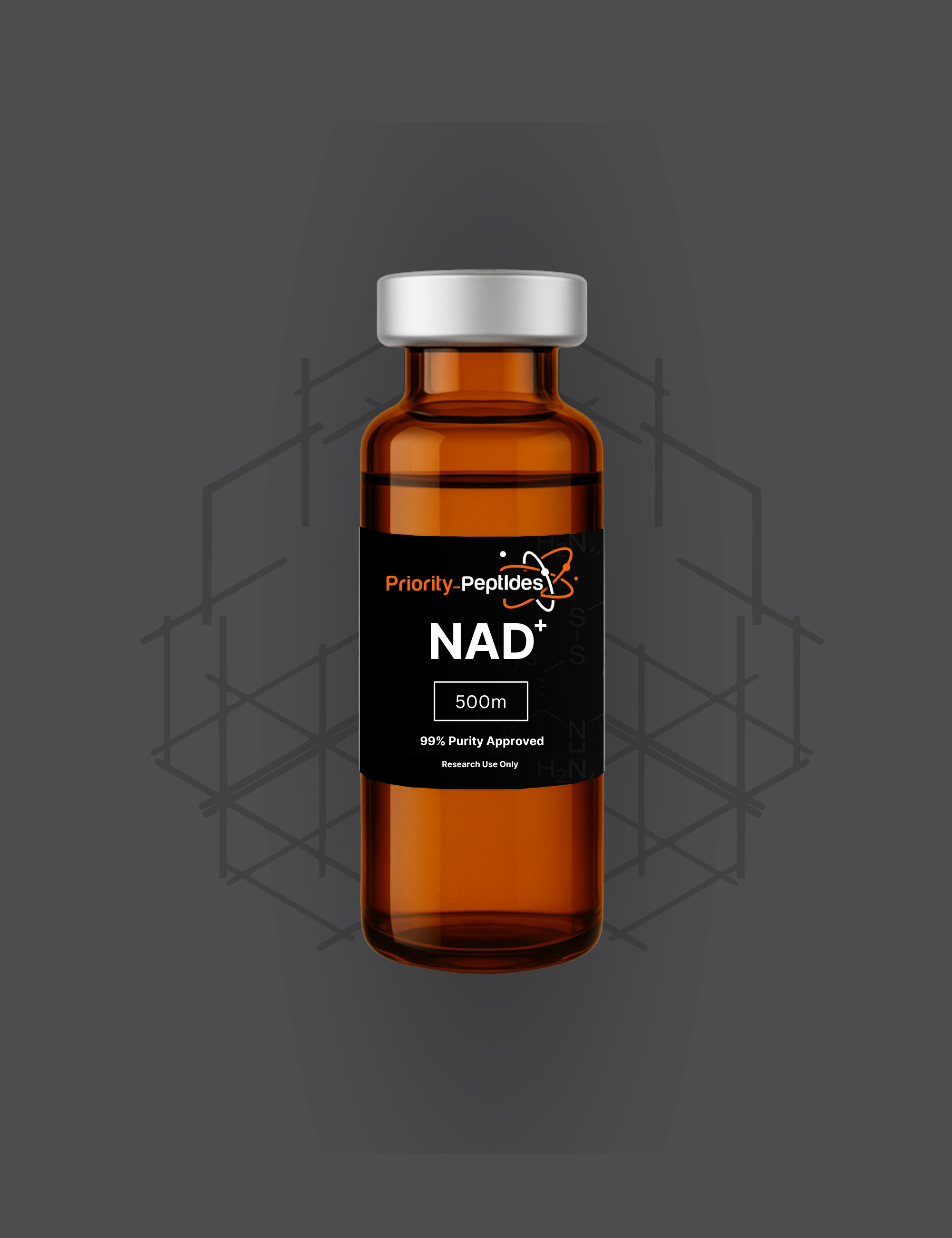
NAD+ 500mg
$64.99
Out of stock
Nicotinamide adenine dinucleotide (NAD+) is a crucial coenzyme found in all living cells, playing a vital role in cellular metabolism, energy production, and DNA repair. It is a critical molecule in redox reactions, serving as an electron carrier in various metabolic pathways such as glycolysis, the citric acid cycle, and oxidative phosphorylation. NAD+ is also an essential substrate for enzymes like sirtuins and poly(ADP-ribose) polymerases (PARPs), significantly influencing cellular aging, stress responses, and genomic stability.
Introducing Nicotinamide Adenine Dinucleotide (NAD+): A Key Cofactor in Cellular Metabolism and Aging Research
What is NAD+?
Nicotinamide adenine dinucleotide (NAD+) is a crucial coenzyme found in all living cells, playing a vital role in cellular metabolism, energy production, and DNA repair. It is a critical molecule in redox reactions, serving as an electron carrier in various metabolic pathways such as glycolysis, the citric acid cycle, and oxidative phosphorylation. NAD+ is also an essential substrate for enzymes like sirtuins and poly(ADP-ribose) polymerases (PARPs), significantly influencing cellular aging, stress responses, and genomic stability.
Chemical Structure and Properties
NAD+ is a dinucleotide composed of two nucleotides joined through their phosphate groups. One nucleotide features an adenine base, while the other contains nicotinamide.
- Molecular Formula: C₂₁H₂₇N₇O₁₄P₂
- Molecular Weight: 663.43 g/mol
- CAS Number: 53-84-9
- PubChem SID: 5980
- Chemical Structure: O OH || | O-P-O-P-OH | | O O | |
- Adenine Nicotinamide
This structure illustrates the connectivity between the adenine and nicotinamide nucleotides through phosphate linkages, emphasizing its role in energy transfer and metabolic processes.
NAD+ Research
Research on NAD+ has revealed its profound impact on various biological processes:
1. Redox Reactions: NAD+ serves as a key electron carrier in the process of cellular respiration, cycling between its oxidized (NAD+) and reduced (NADH) forms. This redox function is critical for ATP production and overall energy metabolism.
2. DNA Repair and Genomic Stability: NAD+ is a substrate for PARP enzymes involved in DNA damage repair. This function is essential for maintaining genomic integrity, particularly in response to oxidative stress and other DNA- damaging factors.
3. Sirtuin Activation: NAD+ is critical for the activity of sirtuins, a family of proteins that regulate cellular longevity, inflammation, mitochondrial function, and metabolic processes. Sirtuins have gained attention for their potential role in the aging process and age-related diseases.
4. Cellular Energy Production: NAD+ facilitates ATP generation in mitochondria by shuttling electrons during oxidative phosphorylation, which is vital for cellular energy homeostasis.
5. Metabolic Disorders: Research into NAD+ precursors, such as nicotinamide riboside (NR) and nicotinamide mononucleotide (NMN), has indicated their potential therapeutic benefits in metabolic issues, including obesity, diabetes, and insulin resistance (Yoshino et al., 2021).
Future Research Directions
Ongoing and future research seeks to fully elucidate the therapeutic potential of NAD+
and its precursors. Key areas of investigation include:
1. NAD+ Delivery Mechanisms: Developing strategies for effective delivery and absorption of NAD+ and its analogs to enhance their physiological effects in human tissues.
2. Synergistic Effects with Other Metabolic Modulators: Exploring the interactions between NAD+ and other metabolites to uncover their combined impact on metabolic health.
3. Aging and Longevity: Investigating the role of NAD+ depletion in aging processes and age-related diseases, alongside developing strategies to restore NAD+ levels for improved health.
4. Pharmacological Targeting of NAD+-Dependent Enzymes: Designing inhibitors or activators that specifically modulate NAD+-dependent enzymes to harness their biological functions for therapeutic benefits.
5. Clinical Applications in Neurodegenerative Diseases: Research is expanding to Conclusion explore the modulation of NAD+ levels in neurodegenerative conditions, which often correlate with NAD+ depletion.
Conclusion
NAD+ is an essential cofactor in cellular metabolism and a pivotal molecule in the study of aging and metabolic health. Its implications in energy production, DNA repair, and cellular resilience make it a critical focus of research in biomedical fields.
Disclaimer
This information is for research and educational purposes only. NAD+ is not approved for human use and is intended solely for in vitro studies and experimental applications.
Scientific References and Further Reading
1. Rajman, L., et al. (2018). NAD+ Metabolism: From Regulation to Therapeutics. Cell Metabolism. https://www.cell.com/cell-metabolism/fulltext/S1550-4131(18)30203-5
2. Imai, S., et al. (2022). NAD+ as a Key Regulator of Metabolism and Aging. Nature Reviews Molecular Cell Biology. https://www.nature.com/articles/s41580-021-00421-7