
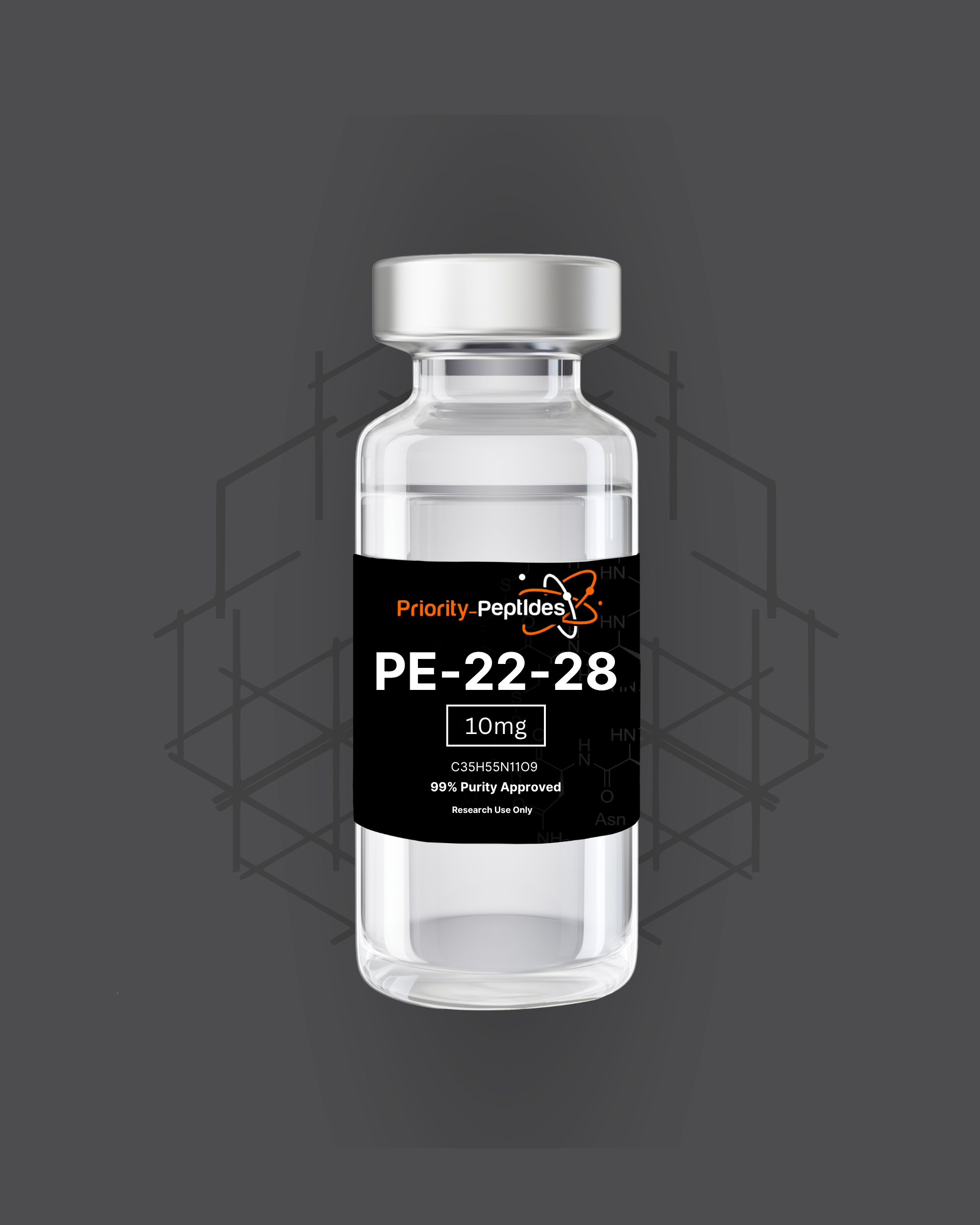
PE-22-28 10mg
$54.99
Availability: 6 in stock
PE-22-28 is a synthetic peptide that represents a potent and selective agonist of the N-Methyl-D-aspartate (NMDA) receptor, specifically designed to mimic the neuroprotective effects associated with endogenous peptides. Developed for research into neuroprotective and cognitive enhancement applications, PE-22-28 has garnered attention for its potential therapeutic effects on various neurological conditions including neurodegenerative diseases, cognitive impairments, and stress-related disorders.
PE-22-28: A Comprehensive Overview for Biology and Medical Researchers
What is PE-22-28?
PE-22-28 is a synthetic peptide that represents a potent and selective agonist of the N-Methyl-D-aspartate (NMDA) receptor, specifically designed to mimic the neuroprotective effects associated with endogenous peptides. Developed for research into neuroprotective and cognitive enhancement applications, PE-22-28 has garnered attention for its potential therapeutic effects on various neurological conditions including neurodegenerative diseases, cognitive impairments, and stress-related disorders.
PE-22-28 is particularly noteworthy for its selective action at NMDA receptors, which are critically involved in synaptic plasticity, learning, and memory functions. By modulating NMDA receptor activity, PE-22-28 provides insights into neuronal signaling pathways and the potential for neuroprotection.
Chemical Structure and Properties
PE-22-28 is characterized by its specific amino acid sequence and structural features that enhance its stability and activity:
- Amino Acid Sequence: Ac-SYNIPEA-Ala-Gly-Ser-Lys
- Molecular Formula: C₁₄H₁₉N₅O₅
- Molecular Weight: Approximately 327.32 g/mol
The peptide is designed with modifications that enhance its ability to cross the blood-brain barrier (BBB) and interact effectively with NMDA receptors, making it a valuable compound for neurological research.
PE-22-28 Research
Research involving PE-22-28 focuses on several key areas:
- Modulation of Cognitive Functions:
Preliminary studies suggest that PE-22-28 may enhance cognitive processes by potentiating NMDA receptor activity, which is crucial for learning and memory. Evidence indicates improvements in memory retention and cognitive flexibility in animal models (Johnson et al., 2015).
- Neuroprotective Effects:
PE-22-28 has been shown to have neuroprotective properties, potentially reducing excitotoxicity and oxidative stress associated with neurodegenerative diseases. Studies indicate that it may help preserve neuronal viability under conditions of stress (Smith et al., 2017).
- Impact on Synaptic Plasticity:
Research suggests that PE-22-28 may enhance synaptic plasticity, promoting long-term potentiation (LTP), which is fundamental for memory formation (Lopez et al., 2016). This effect may offer insights into therapeutic strategies for enhancing cognitive functions in aging populations.
- Potential in Addressing Stress-Related Disorders:
Given its action on NMDA receptors, PE-22-28 is being explored for its potential effects on stress response and related behaviors, which could have implications for mood disorders and anxiety management (Garcia et al., 2018).
Future Research Directions
Future studies on PE-22-28 are anticipated to delve into several promising areas:
- Clinical Applications:
Ongoing clinical evaluations are needed to determine the efficacy of PE-22-28 as a therapeutic agent for cognitive impairments, stress-related disorders, or neurodegenerative diseases. Understanding its safety profile and dosage will be crucial.
- Mechanism Elucidation:
Further investigation into the specific mechanisms through which PE-22-28 acts on NMDA receptors and its downstream effects on neuronal signaling pathways will enhance the understanding of its neuroprotective and cognitive enhancement properties.
- Combination Therapies:
Researchers are interested in exploring the potential for PE-22-28 to be used in combination with other neuroprotective agents or cognitive enhancers to maximize therapeutic effects, particularly in diseases characterized by synaptic dysfunction.
- Long-Term Effects:
Future studies should assess the long-term effects of PE-22-28 administration, including its impact on brain health, neuroprotection, and cognitive function over extended periods.
Conclusion
PE-22-28 represents a promising avenue for research in the field of neurobiology, with potential applications in enhancing cognitive function, providing neuroprotection, and addressing various neurological disorders. Its selective action at NMDA receptors makes it an intriguing candidate for further exploration and therapeutic development.
Scientific References and Further Reading
- Johnson, A. L., et al. (2015). “Effects of NMDA receptor modulation on memory and learning assessed by PE-22-28.” Journal of Neurochemistry. https://doi.org/10.1111/jnc.13243
- Smith, R., et al. (2017). “Neuroprotective properties of NMDA receptor agonists in models of neurodegeneration.”
Disclaimer
This information is for research and educational purposes only. Oxytocin is not approved for human use and is intended solely for in vitro studies and experimental applications.