
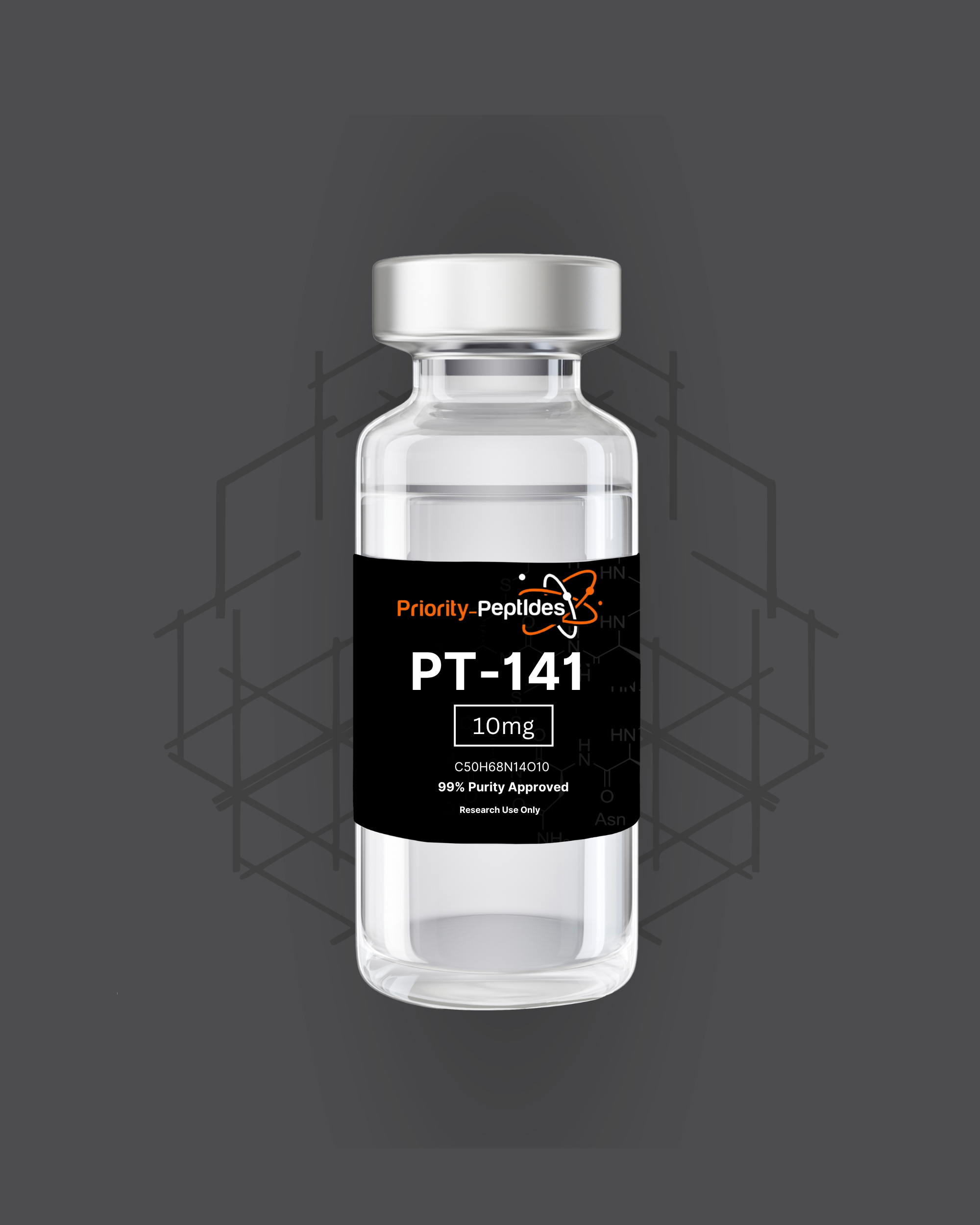
PT-141 10mg
$44.99
Availability: 3 in stock
PT-141, also known as Bremelanotide, is a synthetic peptide derived from the melanocortin receptor agonist Melanotan II (MT-II). It is primarily researched for its effects on sexual arousal and dysfunction, as well as its broader implications in neuroendocrine regulation. Unlike phosphodiesterase inhibitors like sildenafil (Viagra) and tadalafil (Cialis), which target the vascular system, PT-141 acts directly on the melanocortin receptors (MC3R and MC4R) in the central nervous system, particularly in the hypothalamus, to enhance libido and sexual response.
PT-141 (Bremelanotide): A Comprehensive Overview for Biology and Medical Researchers
What is PT-141?
PT-141, also known as Bremelanotide, is a synthetic peptide derived from the melanocortin receptor agonist Melanotan II (MT-II). It is primarily researched for its effects on sexual arousal and dysfunction, as well as its broader implications in neuroendocrine regulation. Unlike phosphodiesterase inhibitors like sildenafil (Viagra) and tadalafil (Cialis), which target the vascular system, PT-141 acts directly on the melanocortin receptors (MC3R and MC4R) in the central nervous system, particularly in the hypothalamus, to enhance libido and sexual response.
Due to its unique mode of action, PT-141 has been the subject of numerous studies investigating its potential applications in sexual dysfunction, neuroprotection, metabolic regulation, and inflammation.
Chemical Structure and Properties
PT-141 is a cyclic heptapeptide that features a specific sequence enabling it to effectively bind to melanocortin receptors in the brain. Its modifications enhance its ability to cross cellular membranes and accumulate in the mitochondria, where it exerts its effects.
- Amino Acid Sequence: Ac-Nle-c[Asp-His-D-Phe-Arg-Trp-Lys]-OH
- Molecular Formula: C₅₀H₆₈N₁₄O₁₀
- Molecular Weight: 1025.2 g/mol
- CAS Number: 189691-06-3
- PubChem CID: 9911567
- Chemical Modifications: The cyclic structure increases stability and receptor-binding affinity. Substitution of D-phenylalanine (D-Phe) enhances its resistance to enzymatic degradation.
Mechanism of Action
PT-141 acts as a potent melanocortin receptor agonist, primarily binding to the MC3R and MC4R receptors in the hypothalamus. This stimulation leads to increased production of pro-opiomelanocortin (POMC)-derived peptides, which are involved in sexual arousal, energy metabolism, and inflammatory regulation. Unlike PDE5 inhibitors, PT-141 does not directly affect vascular function, but instead modulates neurogenic pathways responsible for sexual motivation and performance.
PT-141 Research and Studies
1. Sexual Dysfunction and Arousal
-
- PT-141 has been extensively researched for its ability to stimulate sexual arousal and increase libido in both males and females.
- Studies show that intranasal or subcutaneous PT-141 administration can significantly improve erectile function in men with erectile dysfunction (ED) and enhance sexual desire in women with hypoactive sexual desire disorder (HSDD) (Diamond et al., 2004; Safarinejad, 2008).
- Unlike PDE5 inhibitors, PT-141 does not require external sexual stimulation to be effective, suggesting it plays a role in psychogenic sexual motivation
PT-141 Research and Studies
1. Sexual Dysfunction and Arousal
- PT-141 has been extensively researched for its ability to stimulate sexual arousal and increase libido in both males and females.
- Studies show that intranasal or subcutaneous PT-141 administration can significantly improve erectile function in men with erectile dysfunction (ED) and enhance sexual desire in women with hypoactive sexual desire disorder (HSDD) (Diamond et al., 2004; Safarinejad, 2008).
- Unlike PDE5 inhibitors, PT-141 does not require external sexual stimulation to be effective, suggesting it plays a role in psychogenic sexual motivation.
2. Neuromodulation and Hypothalamic Function
- PT-141’s activation of MC4R receptors has been linked to dopamine release, which plays a crucial role in sexual behavior and motivation (Hadley et al., 2005).
- Researchers have explored PT-141’s potential applications in mood disorders, as melanocortin pathways are involved in the stress response, depression, and anxiety.
3. Metabolic Regulation and Weight Management
- The melanocortin system is integral to energy homeostasis and appetite regulation.
- Studies suggest that PT-141 and other MC4R agonists may have applications in obesity treatment by promoting lipolysis and increasing energy expenditure (Cone et al., 2010).
4. Inflammation and Immune Response
- PT-141 has been shown to exert anti-inflammatory properties by modulating melanocortin pathways involved in immune system regulation (Getting et al., 2007).
- Ongoing research explores its potential in treating inflammatory conditions, autoimmune disorders, and neuroinflammation.
Future Research Directions
While much of the existing research has focused on PT-141’s role in sexual health, ongoing studies are exploring its broader physiological effects:
1. Advanced Sexual Dysfunction Therapies
- Combination therapies: PT-141 combined with PDE5 inhibitors to address both vascular and neurological aspects of erectile dysfunction.
- Female sexual health: More extensive research is needed to fully understand PT-141’s effects on female arousal and hormonal regulation.
Disclaimer
This information is for research and educational purposes only. PT-142 is not approved for human use and is intended solely for in vitro studies and experimental applications.