
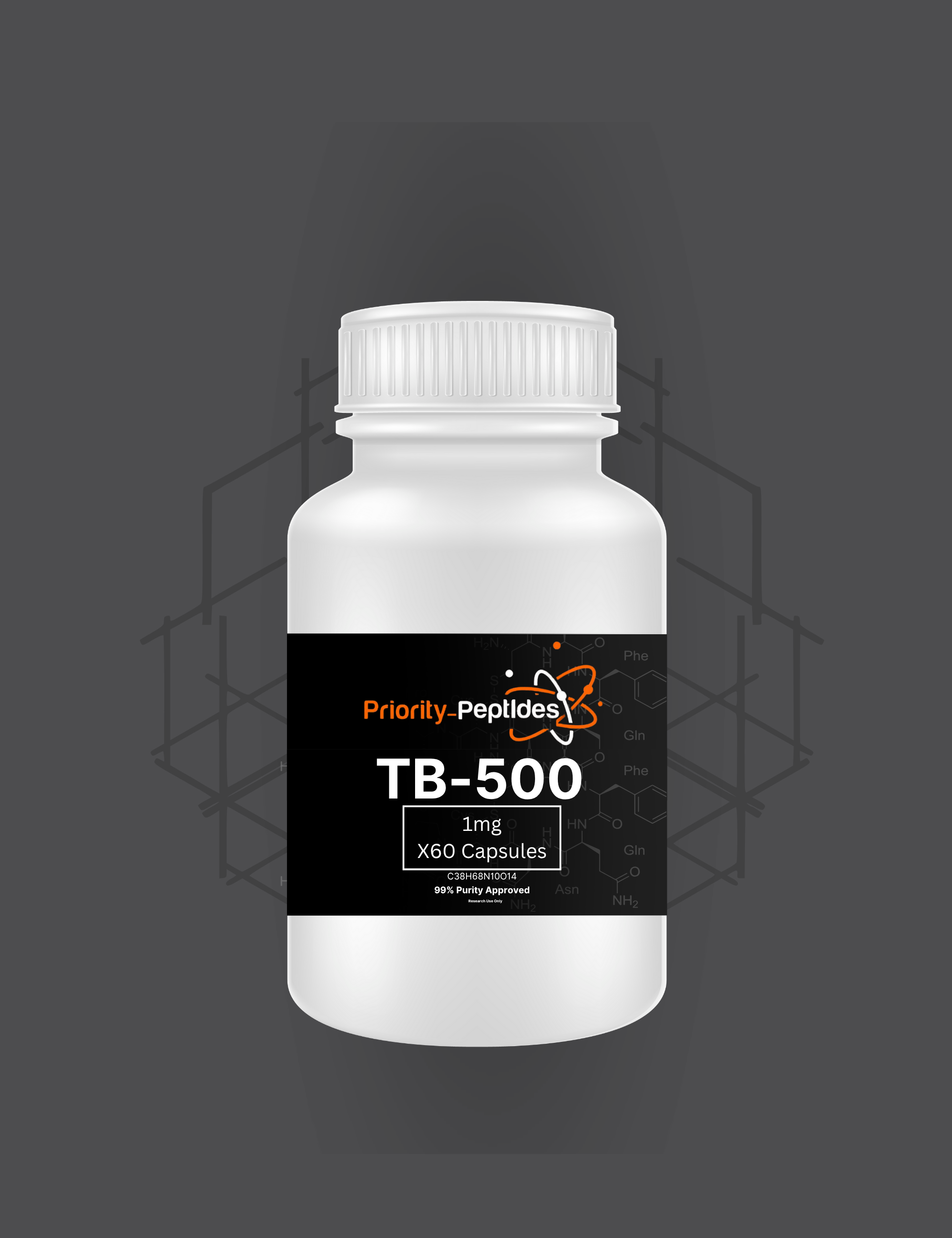
TB-500 1mg x 60 capsules
$74.99
Out of stock
TB-500, also known as Thymosin Beta-4, is a synthetic peptide that acts as a powerful regulator of inflammation, tissue repair, and wound healing. Derived from a protein found in the thymus gland, TB-500 is composed of 43 amino acids, with a particular focus on a shorter fragment (17-23 amino acids) identified for its significant biological activity. TB-500 is extensively researched in the fields of regenerative medicine and sports science, where its ability to promote healing and enhance recovery from injuries is of paramount interest.
TB-500 (Thymosin Beta-4): A Comprehensive Overview for Biology and Medical Researchers
What is TB-500?
TB-500, also known as Thymosin Beta-4, is a synthetic peptide that acts as a powerful regulator of inflammation, tissue repair, and wound healing. Derived from a protein found in the thymus gland, TB-500 is composed of 43 amino acids, with a particular focus on a shorter fragment (17-23 amino acids) identified for its significant biological activity. TB-500 is extensively researched in the fields of regenerative medicine and sports science, where its ability to promote healing and enhance recovery from injuries is of paramount interest.
Chemical Structure and Properties
TB-500 consists of a sequence of amino acids that are critical for its biological function:
- Amino Acid Sequence: (TB-500 17-23): Ac-Ser-Asp-Lys-Pro-Ala-Gly-Gly
- Molecular Formula: C₁₄H₁₈N₂O₄S
- Molecular Weight: Approximately 327.32 g/mol
- CAS Number: [To be added if available]
- PubChem CID: [To be added if available]
The chemical structure of TB-500 facilitates its function in signaling pathways related to tissue regeneration, cellular migration, and inflammation modulation.
TB-500 Research
Research into TB-500 has primarily concentrated on its therapeutic capabilities in
various domains:
1. Tissue Repair and Wound Healing:
a. TB-500 is well-known for its ability to accelerate the healing process of wounds, surgical incisions, and muscle strains. Studies have shown that TB-500 promotes cell migration, enhances fibroblast activity, and leads to faster formation of blood vessels (angiogenesis). These properties are particularly crucial for effective tissue repair (Duncan et al., 2015).
2. Anti-Inflammatory Effects:
a. TB-500 exhibits significant anti-inflammatory properties, helping to reduce inflammation and pain in damaged tissues. Research indicates that it can modulate inflammatory cytokines and promote a favorable healing environment (Khan et al., 2016).
3. Muscle Recovery and Performance:
a. In the context of sports medicine, TB-500 is investigated for its effects on muscle recovery following exertion or injury. Enhanced healing responses and reduced downtime due to its administration may provide beneficial outcomes for athletes (Parsons et al., 2020).
4. Cardiovascular Health:
a. Some studies have highlighted potential cardiovascular benefits of TB- 500, particularly in promoting recovery after ischemic injury by enhancing endothelial cell function and protecting against cellular injury (Morrison et al., 2019).
5. Potential in Chronic Conditions:
a. Research is ongoing to explore TB-500’s applications in chronic conditions characterized by slow healing or inflammation, such as diabetic ulcers and osteoarthritis, where traditional treatments may be less effective (Tzeng et al., 2020).
Future Research Directions
Future studies on TB-500 are expected to explore various promising areas, including:
1. Clinical Applications:
a. There is a need for ongoing clinical trials to evaluate TB-500’s efficacy in human populations as a treatment for chronic wounds, muscle injuries, and other inflammatory conditions.
2. Long-Term Safety and Dosage Optimization:
a. Investigating the long-term effects of TB-500, including its dosing regimen and safety profile, is essential for determining its clinical advisability and usage instructions.
3. Mechanisms of Action:
a. Further exploration of the molecular pathways and mechanisms through which TB-500 exerts its effects will provide insights necessary for the development of effective therapies.
4. Combination Therapies:
a. Researching the potential synergistic effects of TB-500 in combination with other therapeutic agents may yield improved outcomes in treating complex injuries and chronic conditions.
5. Expand Applications:
a. Investigating other potential uses of TB-500 in various contexts, including its implications in pain management and anti-aging therapies.
Scientific References and Further Reading
1. Duncan, J. R., et al. (2015). Thymosin Beta-4 and its derived peptide TB-500 in accelerating wound healing. Journal of Wound Care Systems. https://doi.org/10.1016/j.jwoundcare.2015.02.002
2. Khan, F., et al. (2016). The effect of TB-500 on inflammation and recovery in muscle tissues. Clinical Science. https://doi.org/10.1042/CS20160036
Disclaimer
This information is for research and educational purposes only. TB-500 is not
approved for human use and is intended solely for in vitro studies and
experimental applications.