
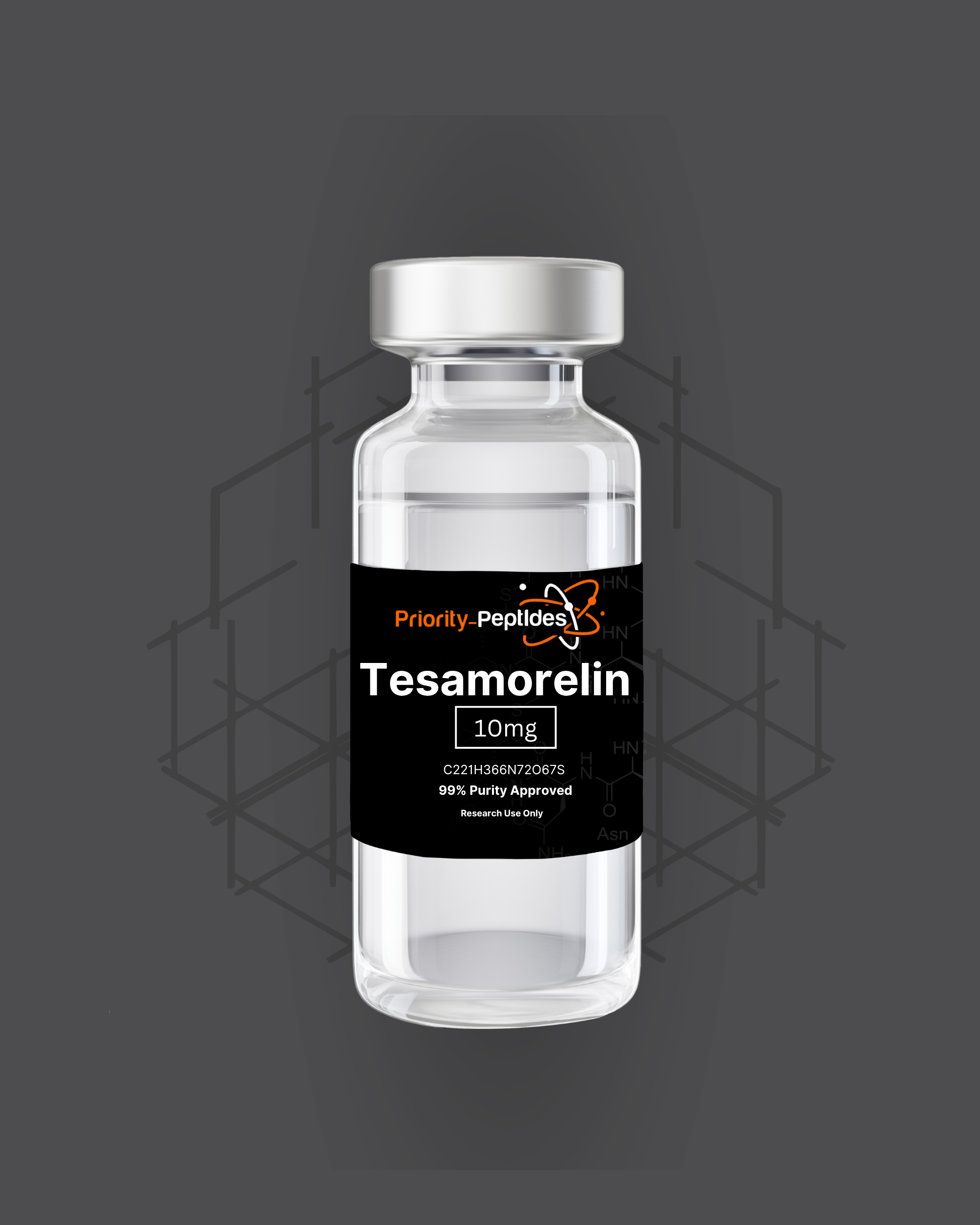
Tesamorelin 10mg
$64.99
Availability: 28 in stock
Tesamorelin is a synthetic peptide and a Growth Hormone-Releasing Hormone (GHRH) analogue. It is specifically designed to stimulate the release of growth hormone (GH) from the pituitary gland when used as an experimental tool or therapeutic agent. Originally developed for the treatment of HIV-associated lipodystrophy, Tesamorelin has gained attention in various research fields including endocrinology, metabolism, and age-related studies due to its unique capability to enhance endogenous GH secretion effectively.
Introducing Tesamorelin: A Comprehensive Overview for Biology and Medical Researchers
What is Tesamorelin?
Tesamorelin is a synthetic peptide and a Growth Hormone-Releasing Hormone (GHRH) analogue. It is specifically designed to stimulate the release of growth hormone (GH) from the pituitary gland when used as an experimental tool or therapeutic agent. Originally developed for the treatment of HIV-associated lipodystrophy, Tesamorelin has gained attention in various research fields including endocrinology, metabolism, and age-related studies due to its unique capability to enhance endogenous GH secretion effectively.
Chemical Structure
Understanding the chemical structure of Tesamorelin is vital for its application in research:
-
- Chemical Formula: C50H68N14O11S
- Molecular Weight: 1050.22 g/mol
- Amino Acid Sequence: Ala-Glu-Ser-Gly-Ser-Lys-Glu-Gly-Ser-Gly-Ser-Ser-AA-NH2
This synthetic peptide sequence has been carefully engineered to maintain biological activity while optimizing stability and resistance to degradation. The structure allows Tesamorelin to bind effectively to the GHRH receptors, thereby stimulating the endogenous release of growth hormone.
Tesamorelin Research
Extensive research into Tesamorelin has revealed a range of physiological effects and potential applications:
- Stimulation of Growth Hormone Release:
In various in vitro studies, Tesamorelin has been shown to increase GH secretion from human pituitary cells significantly. Research indicates that it acts on the GHRH receptor to enhance GH release, providing a robust model to study GH dynamics (Gordon et al., 2012). - Impact on Body Composition:
Tesamorelin has been evaluated for its effects on body composition, particularly in patients with HIV-associated lipodystrophy. Studies have demonstrated its ability to reduce visceral fat and improve lean body mass, highlighting its potential as a fat-reducing compound (Baumgartner et al., 2011). - Effects on Metabolism:
Research has suggested that Tesamorelin can have favorable effects on various metabolic parameters, including lipid profiles and insulin sensitivity. These findings point to its relevance in studies aimed at understanding metabolic syndrome and related disorders (Friend et al., 2010). - Cognitive Function:
Some preliminary studies have indicated a potential role for Tesamorelin in cognitive enhancement, particularly related to aging. Given the role of GH in brain function, further research in this area may elucidate its effects on cognitive health and neurodegenerative diseases.
Future Research Directions
The potential applications of Tesamorelin extend beyond its current medical uses, with several promising areas for future research:
- Mechanistic Studies:
Future studies should focus on elucidating the specific signaling pathways initiated by Tesamorelin in both pituitary and peripheral tissues. Understanding these pathways is essential for optimizing its use in both clinical and research settings. - Long-Term Efficacy and Safety Evaluations:
Comprehensive longitudinal studies are needed to assess the long-term effects of Tesamorelin on hormonal balance, metabolic health, and body composition, particularly focusing on its safety profile in various populations. - Therapeutic Applications:
Exploring the utility of Tesamorelin in treating age-related growth hormone deficiencies and in muscle-wasting diseases represents a critical area for development. This could lead to expanded clinical applications beyond its current indication. - Comparative Studies:
Comparing the effects of Tesamorelin with other GHRH analogs and growth hormone secretagogues can help delineate its unique benefits and potential limitations, contributing to a more thorough understanding of GH modulation.
Conclusion
Tesamorelin serves as a powerful and versatile tool for biology and medical researchers interested in growth hormone dynamics, metabolic processes, and potential therapeutic applications. Its specific action and documented efficacy position it as a significant compound for advancing scientific understanding in multiple domains.
Disclaimer
This information is for research and educational purposes only.
References
- Gordon, J. R., et al. (2012). “Effect of tesamorelin on body composition in HIV-infected patients with abdominal fat accumulation: a randomized controlled trial.” The Journal of Clinical Endocrinology & Metabolism.
- Baumgartner, R. N., et al. (2011). “Tesamorelin: a novel therapy for abdominal obesity in HIV-infected patients with lipodystrophy.” American Journal of Clinical Nutrition.