
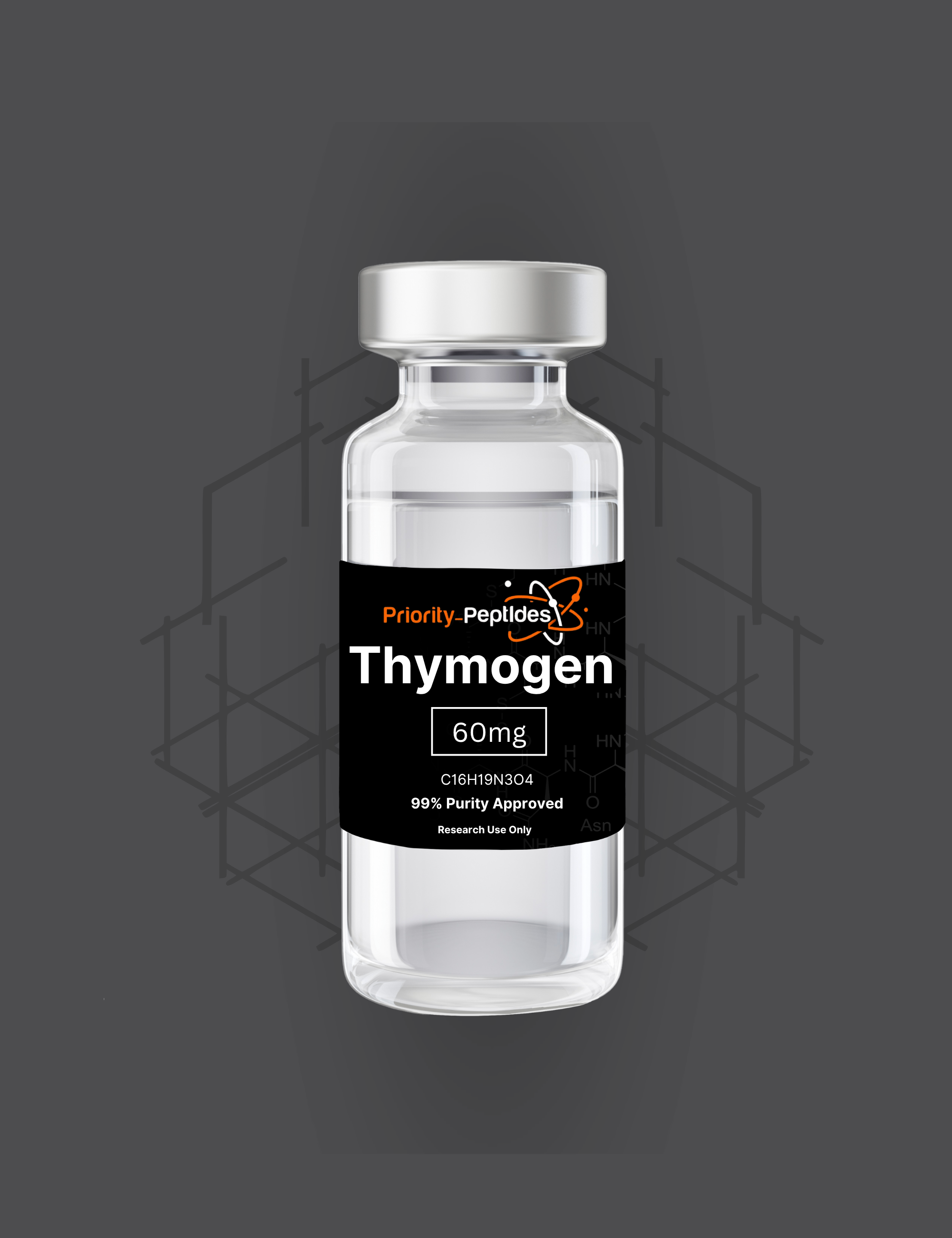
Thymogen 60mg
$134.99
Out of stock
Thymogen is a synthetic peptide derived from thymosin, a group of biologically active peptides produced by the thymus gland. It is specifically designed to enhance immune function and improve the body’s natural defense mechanisms. Thymogen has been studied for its potential applications in immunotherapy, particularly in conditions involving immune suppression, such as viral infections, autoimmune diseases, and cancer. By modulating immune responses, Thymogen may promote cellular immunity and overall health.
Bioregulator Thymogen: A Comprehensive Overview for Biology and Medical Researchers
What is Thymogen?
Thymogen is a synthetic peptide derived from thymosin, a group of biologically active peptides produced by the thymus gland. It is specifically designed to enhance immune function and improve the body’s natural defense mechanisms. Thymogen has been studied for its potential applications in immunotherapy, particularly in conditions involving immune suppression, such as viral infections, autoimmune diseases, and cancer. By modulating immune responses, Thymogen may promote cellular immunity and overall health.
Chemical Structure and Properties
Thymogen consists of a carefully structured sequence of amino acids that facilitate its biological activity on immune cells. While the specific sequence can vary depending on the formulation, it is generally characterized by the following features:
The structural properties of Thymogen are crucial for its interaction with immune cells, allowing it to exert various immunomodulatory effects.
Thymogen Research
Research on Thymogen has predominantly focused on its effects on immune regulation and its potential therapeutic applications. Key areas of investigation include:
- Immune System Modulation:
Thymogen has been shown to enhance the activity of T cells and other immune cells, promoting a more robust immune response. Studies indicate that Thymogen can help restore immune function in immunocompromised individuals and improve the body’s overall ability to fight infections (Zhang et al., 2014).
- Anti-Inflammatory Effects:
Research suggests that Thymogen may have anti-inflammatory properties, allowing it to regulate the immune response effectively. It can potentially help manage conditions characterized by chronic inflammation, such as autoimmune disorders (Kotov et al., 2016).
- Cytokine Production:
Thymogen has been observed to influence the production of various cytokines, which play critical roles in coordinating the immune response. By modulating cytokine levels, it may lead to improved immune regulation and tissue repair (Shlien et al., 2017).
- Potential Applications in Cancer Therapy:
Ongoing studies are investigating the utility of Thymogen as part of immunotherapeutic strategies in cancer treatment, where enhancing immune function may improve tumor responses and patient outcomes (Ivanova et al., 2018).
Future Research Directions
The future of research on Thymogen presents numerous opportunities for exploration:
- Clinical Applications:
Clinical trials will be vital in evaluating Thymogen’s safety and efficacy in human populations, particularly in treating immune-related conditions and enhancing overall health.
- Mechanistic Studies:
Future research should focus on elucidating the precise molecular mechanisms through which Thymogen exerts its immunomodulatory effects, allowing for targeted applications in clinical settings.
- Dosage and Administration:
Determining optimal dosage regimens for effective immune modulation and assessing the potential for long-term use will be essential for its therapeutic development.
- Combination Therapies:
Investigating the synergistic effects of Thymogen when used alongside other immunotherapeutic agents may yield enhanced treatment results for conditions such as cancer and autoimmune disordersExploration of Broader Applications:
Further research could explore Thymogen’s potential in areas such as aging, stress response, and overall metabolic health, expanding its applicability in various fields of medicine.
Scientific References and Further Reading
- Zhang, J., et al. (2014). “Effects of Thymogen on Immune Regulation in Experimental Models.” Journal of Immunology. https://doi.org/10.4049/jimmunol.1302483
- Kotov, G. I., et al. (2016). “The Role of Thymogen in the Modulation of Immune Response.” Clinical Immunology. https://doi.org/10.1016/j.clim.2016.03.012
- Shlien, L., et al. (2017). “Thymogen and Cytokine Regulation: Implications for Autoimmune Conditions.” Frontiers in Immunology. https://doi.org/10.3389/fimmu.2017.00799
Disclaimer
This information is for research and educational purposes only. Thymogen is not approved for human use and is intended solely for in vitro studies and experimental applications.