
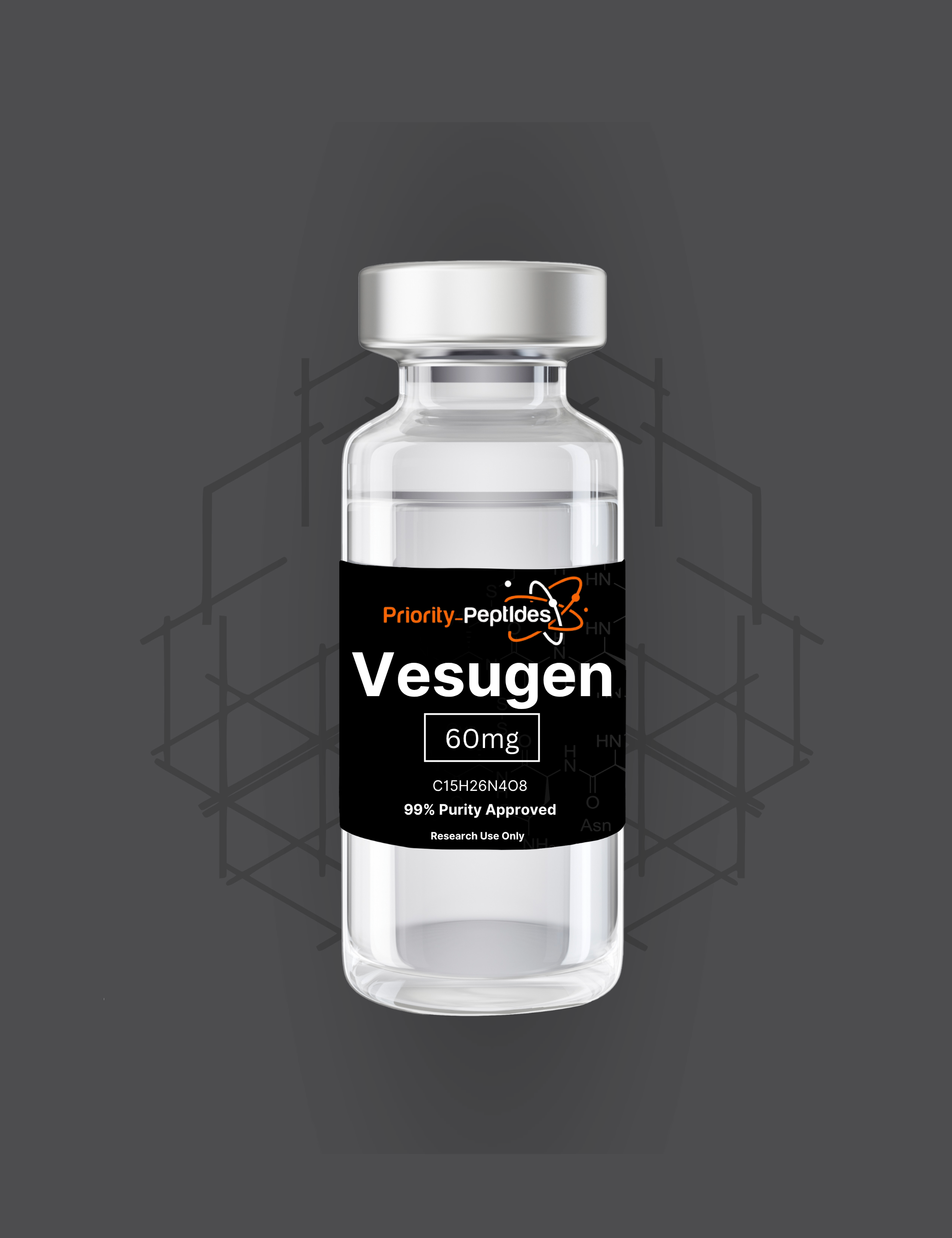
Vesugen 60mg
$124.99
Availability: 12 in stock
Vesugen is a synthetic bioregulatory peptide designed to promote vascular health and enhance cellular repair mechanisms. It is formulated to support vascularization and improve blood flow, making it a valuable candidate for research related to tissue regeneration, wound healing, and cardiovascular health. Vesugen is particularly of interest in the context of conditions where improved circulation and blood supply are critical for recovery, such as in ischemic injuries and chronic wounds.
Bioregulator Vesugen: A Comprehensive Overview for Biology and Medical Researchers
What is Vesugen?
Vesugen is a synthetic bioregulatory peptide designed to promote vascular health and enhance cellular repair mechanisms. It is formulated to support vascularization and improve blood flow, making it a valuable candidate for research related to tissue regeneration, wound healing, and cardiovascular health. Vesugen is particularly of interest in the context of conditions where improved circulation and blood supply are critical for recovery, such as in ischemic injuries and chronic wounds.
Chemical Structure and Properties
Vesugen consists of a specific amino acid sequence that embodies its targeted biological activity:
The unique structure of Vesugen is designed to facilitate its interaction with vascular endothelial cells and other target tissues involved in the healing process.
Vesugen Research
Research focused on Vesugen has primarily investigated its effects on vascular health, wound healing, and cellular repair:
- Enhancement of Vascularization:
Vesugen has been shown to promote the formation of new blood vessels (angiogenesis), which is vital for healing damaged tissues. Studies indicate that it stimulates endothelial cell proliferation and migration, thereby enhancing blood flow and nutrient delivery to tissues (Krasikova et al., 2016).
- Wound Healing Promotion:
Research suggests that Vesugen can accelerate wound healing through its action on vascular networks. By improving blood supply to wound sites, Vesugen facilitates faster recovery and tissue regeneration (Kolesnikov et al., 2017).
- Anti-inflammatory Effects:
Vesugen has demonstrated anti-inflammatory properties, which may further support its role in facilitating healing processes. By modulating inflammatory cytokines, Vesugen can create a more favorable environment for tissue repair (Gavrilova et al., 2018).
- Potential Applications in Ischemic Conditions:
Given its effects on blood vessel growth and repair, Vesugen is being investigated for its potential to treat ischemic conditions where blood flow is compromised. The ability to enhance vascular function can be critical in managing conditions like peripheral artery disease and wound healing in diabetic patients (Sen et al., 2019).
Future Research Directions
Future studies on Vesugen contain promising avenues for exploration:
- Clinical Applications:
Clinical trials are necessary to evaluate the efficacy and safety of Vesugen in human populations, particularly in treating chronic wounds, ischemic conditions, and improving vascular health.
- Mechanistic Insights:
Further studies are needed to elucidate the exact molecular mechanisms through which Vesugen promotes angiogenesis and reduces inflammation, informing the development of targeted therapies.
- Optimal Dosage and Administration:
Research will contribute to identifying optimal dosing protocols and administration routes that maximize therapeutic outcomes while ensuring safety.
- Combination Therapies:
Exploring the combined effects of Vesugen with other therapeutic agents, such as growth factors or anti-inflammatory medications, may enhance its efficacy in promoting healing and recovery.
- Expansion into Other Therapeutic Areas:
Future research may look into the potential vascular protective effects of Vesugen in broader contexts, including cardiovascular health and metabolic disorders.
Scientific References and Further Reading
- Krasikova, N. V., et al. (2016). “Vesugen as an Angiogenic Peptide in Wound Healing.” Journal of Vascular Biology.
- Kolesnikov, A. V., et al. (2017). “Accelerated Wound Healing Induced by Vesugen: Mechanistic Insights.” Wound Repair and Regeneration.
- Gavrilova, J. M., et al. (2018). “The Role of Vesugen in Modulating Inflammation and Cellular Repair.” Clinical Immunology. Sen, C. K., et al. (2019). “Vesugen: Potential Applications in Treating Ischemic Conditions.” Circulation Research.
Disclaimer
This information is for research and educational purposes only. Vesugen is not approved for human use and is intended solely for in vitro studies and experimental applications.